Author Margaret Dowland
Introduction
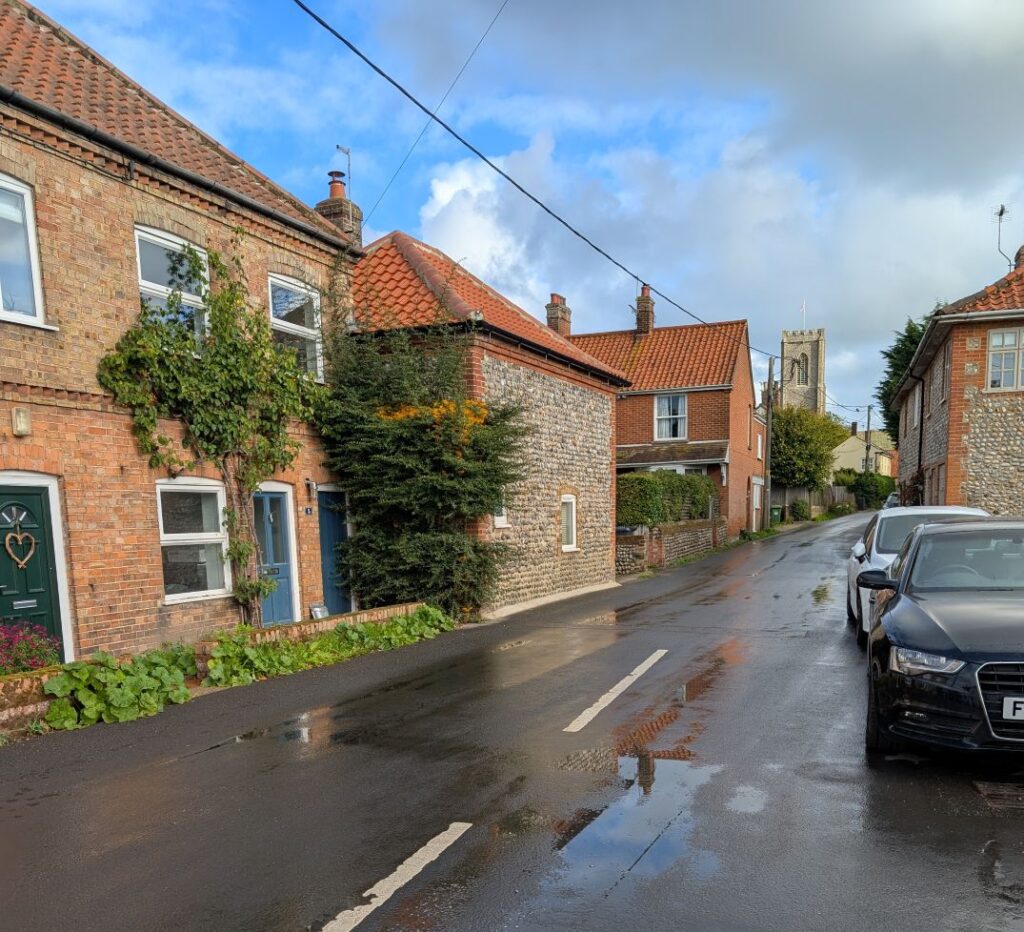
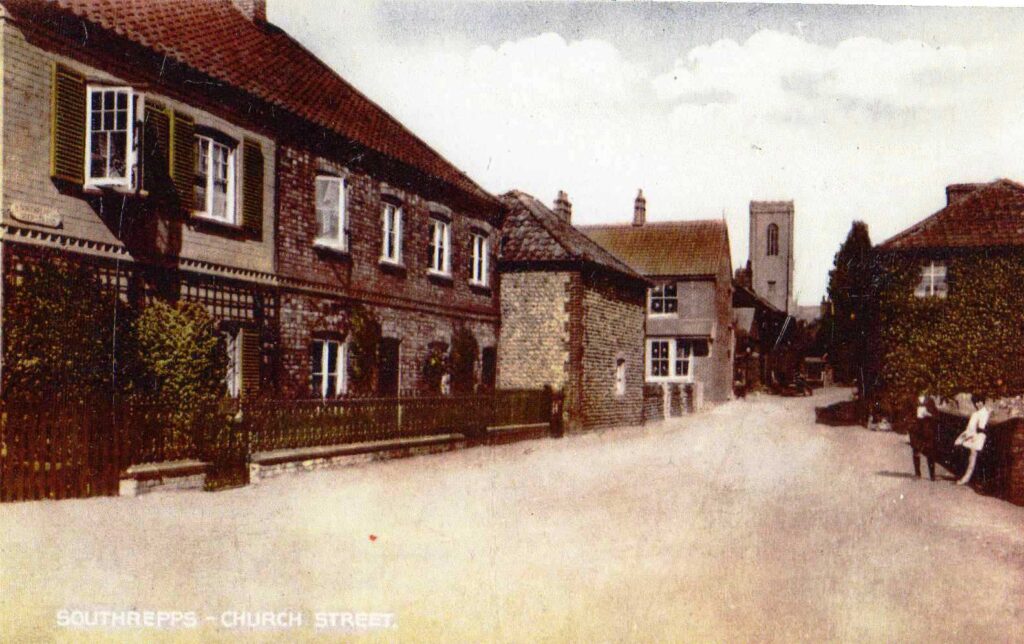
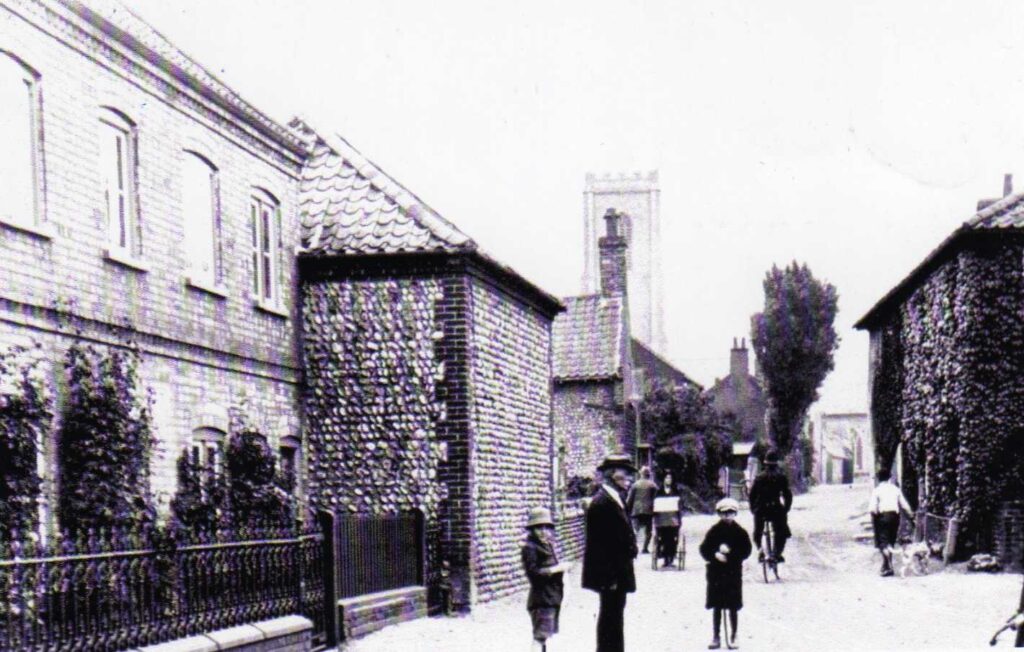
Church Street runs from the church to the High Street. It has some of the oldest houses in Upper Street. At the southern end is the Vernon Arms. There was a pair of Victorian villas called Pleasant Villas near to the pub. Subsidence was given as the reason for their demolition in 2007. The site remains undeveloped to this day. In the same grounds was an old barn which sadly was demolished at the same time.
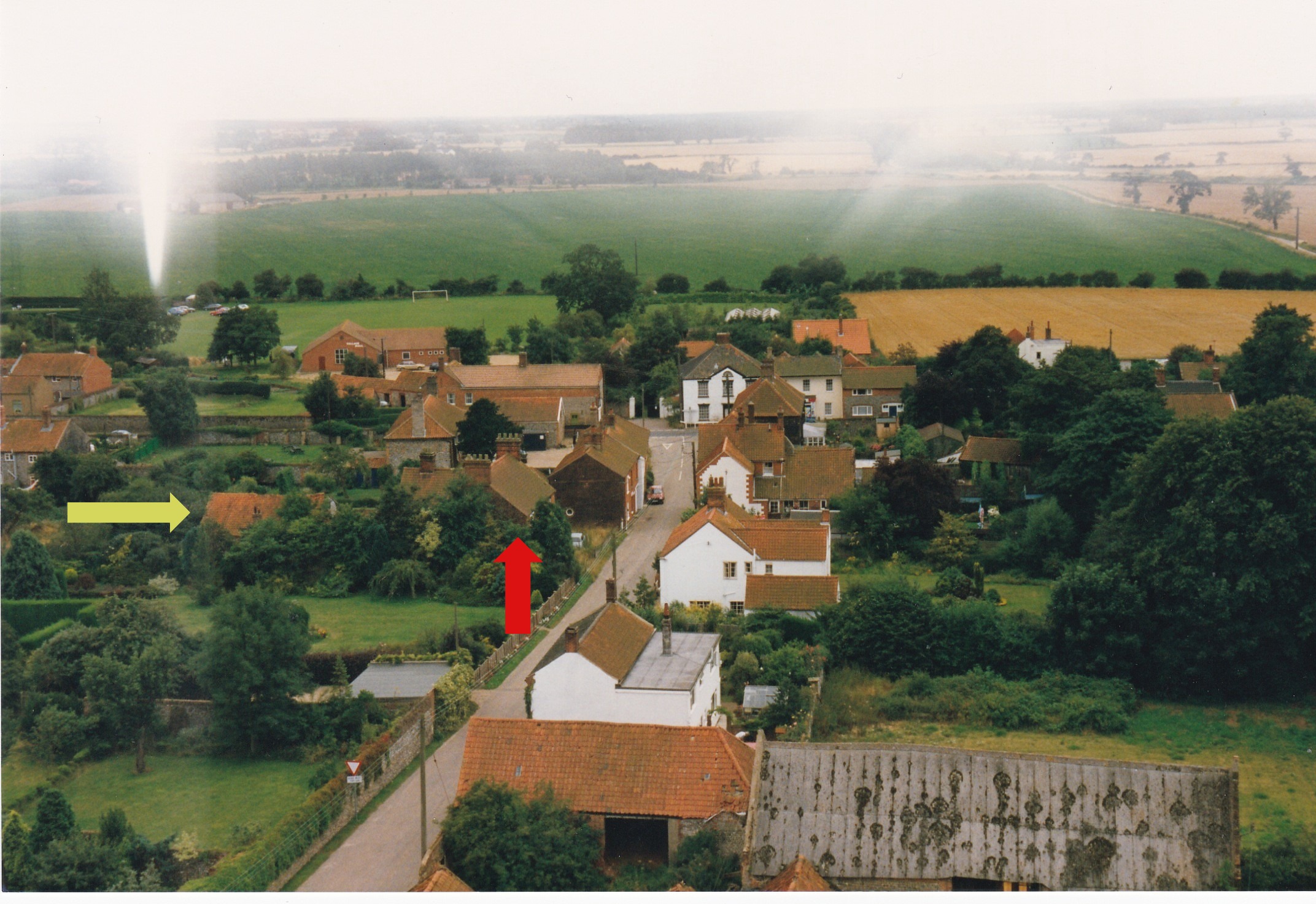
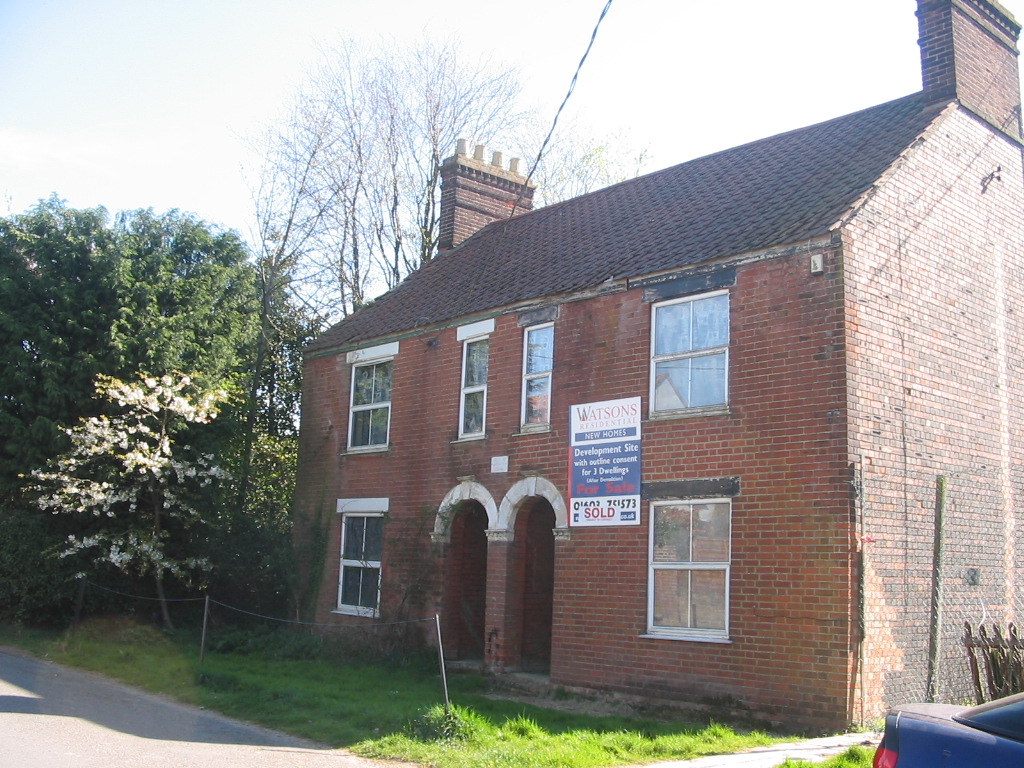
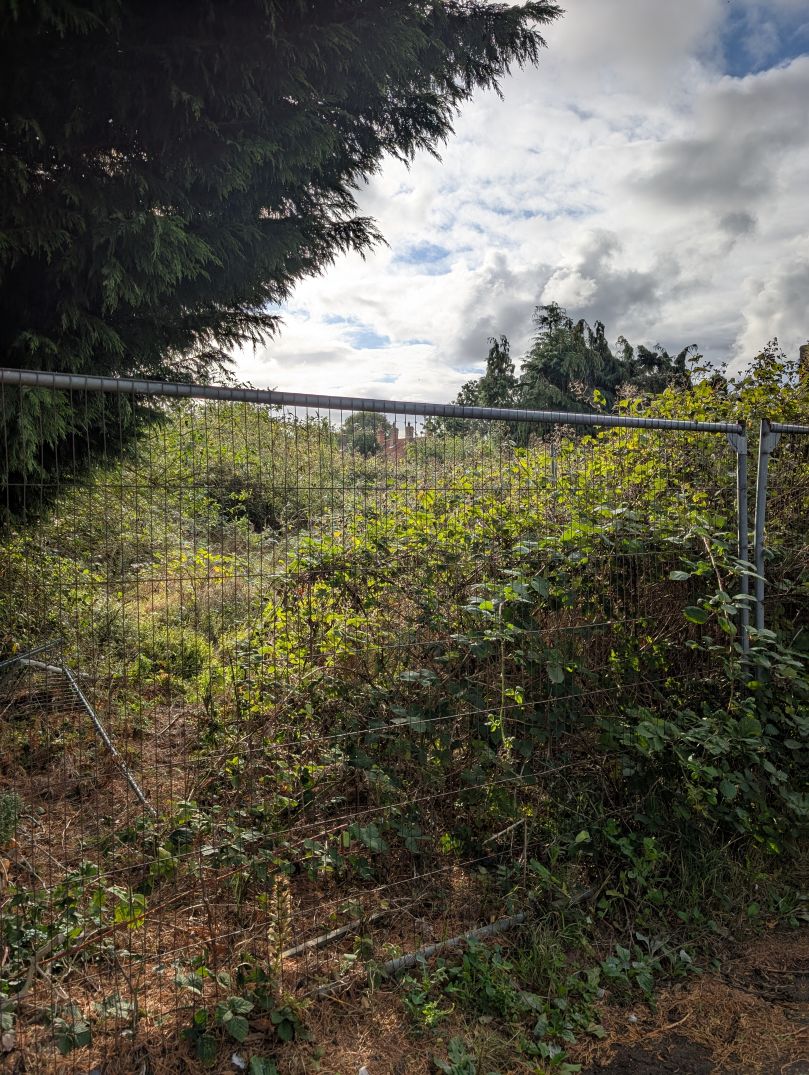
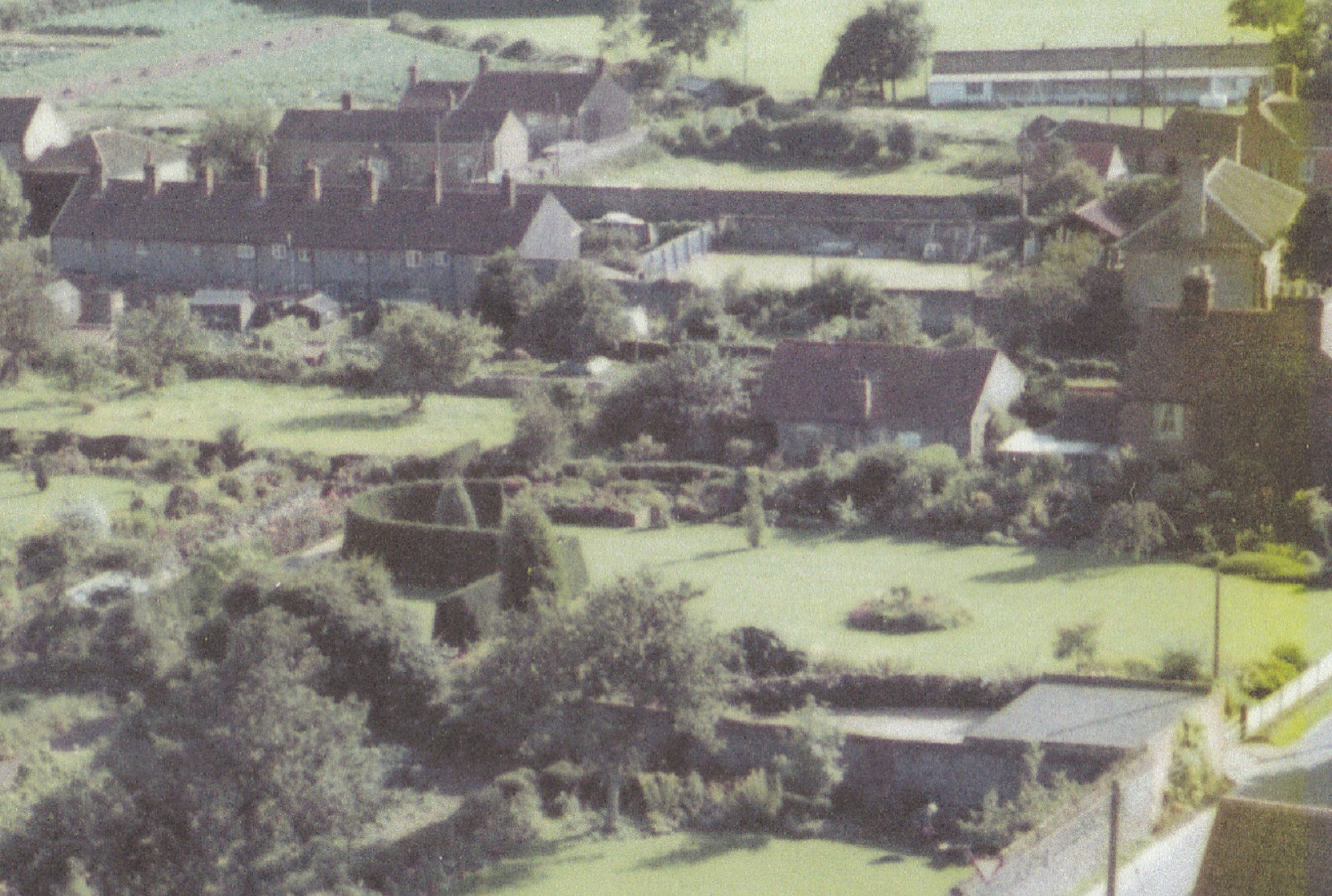
Between Pleasant Villas and Church Farm Cottage was a large ornamental garden which belonged to the White House. It was bought by John Everett of the White House from the Bartrams at Church Farm to prevent it being built on.
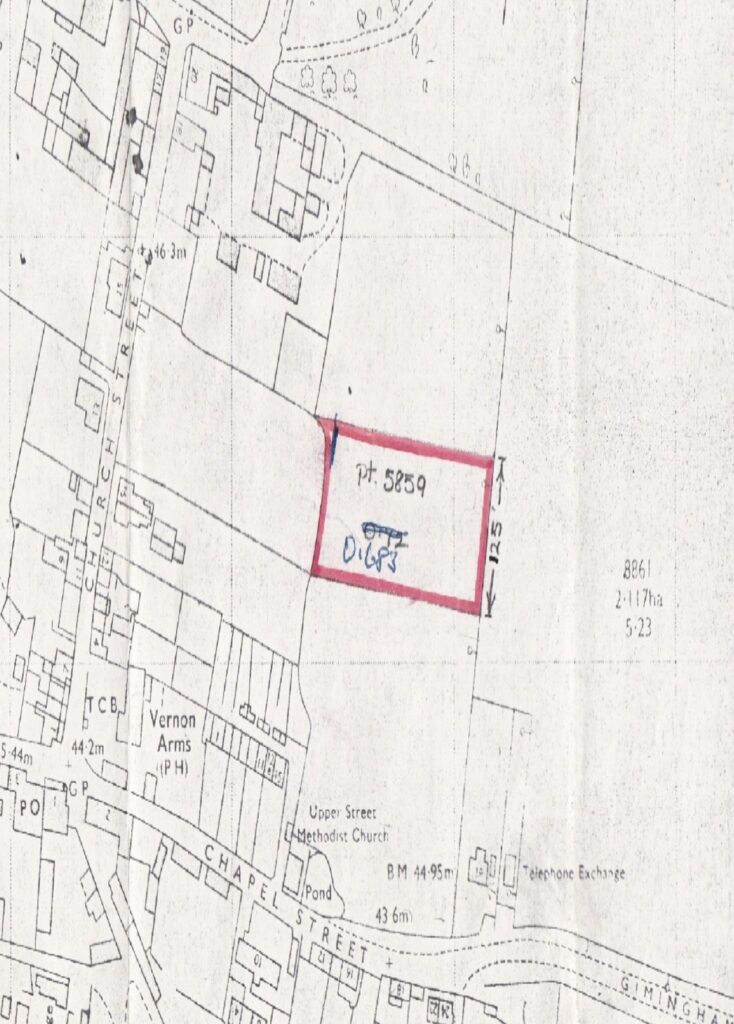
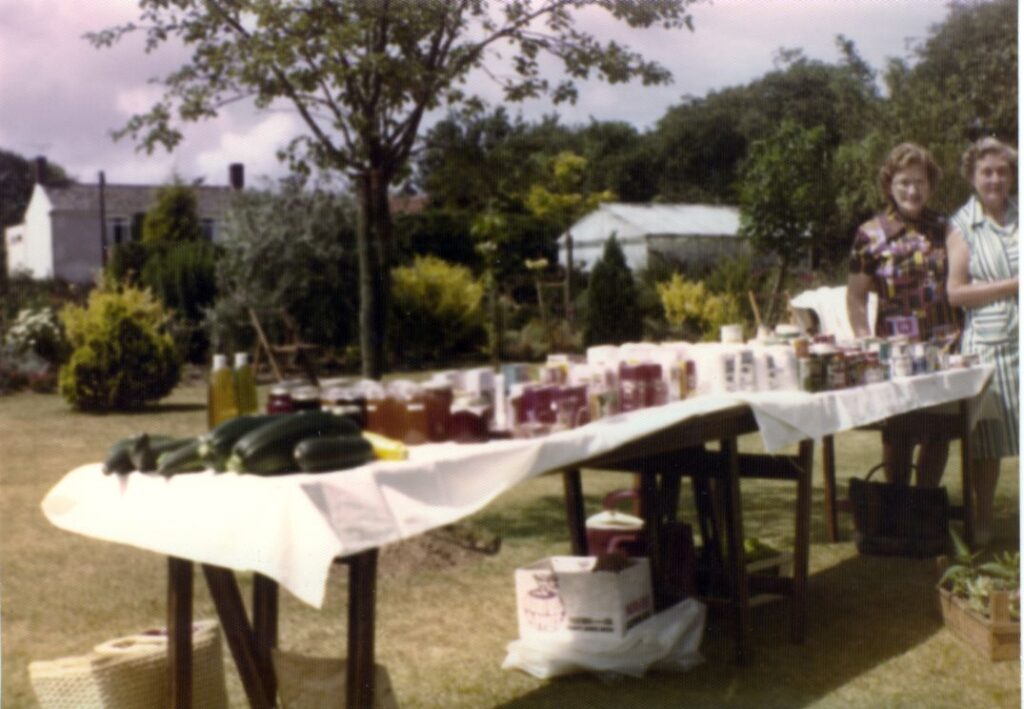
In 1975 he bought a further plot of land which he planted with trees. The garden had been used over the years for various village events. On the death of John’s ex-wife Doreen the garden was sold and two new houses were built in 2023/24. Next to the White House is Poplar House.
On the west side of the road was a grocer’s shop.
There are also two sets of terraced houses near to the Vernon Arms.
Church Farm House
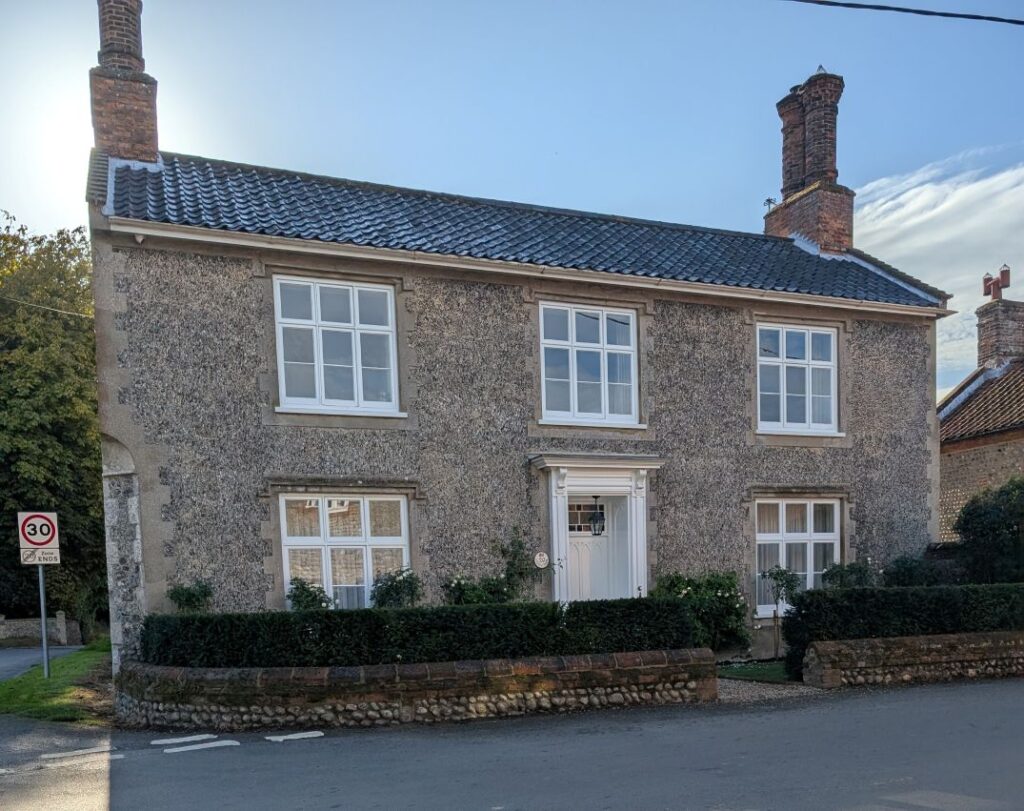
Church Farm is a double pile house of two parallel sections. It has two storeys and a central front door, the front section to the west being of late 18th century. It is most unusually faced with flint flakes set on end and is trimmed with stone. The wall underneath is flint cobbles, there are some stone blocks in the wall. It has a small barrel-vaulted cellar under the front of the house.
During renovation a carved corbel or capital was found this probably came from when the Church when the north and south aisles was demolished in 1788. The renovation also found in the Southeast corner a turret-like wall on the interior hidden behind the paneling which may have been an original spiral staircase. Two larger foundation walls were found when the dampproof course was cut. These ran north under the road towards the Church. The stump of one still protrudes from the west portion of the house.
The rear section of the house is mostly 19th century, but the foundations may be older. It was probably then that the imitation 17th century chimneys were added.Other foundations found under demolished outbuildings are suggestive of previous buildings.
The house had two wells one with an 18th century hand pump, which had softer water.
During restoration a flintlock pistol, a William III coin, 19th century stone jars and an ammonite were found.
The above information came from the Norfolk Heritage explorer site. https://www.heritage.norfolk.gov.uk/record-details?MNF13953-Church-Farm-Church-Street&Index=2&RecordCount=2&SessionID=e2976448-cbc5-4e46-ba3a-8bf08ca4be22
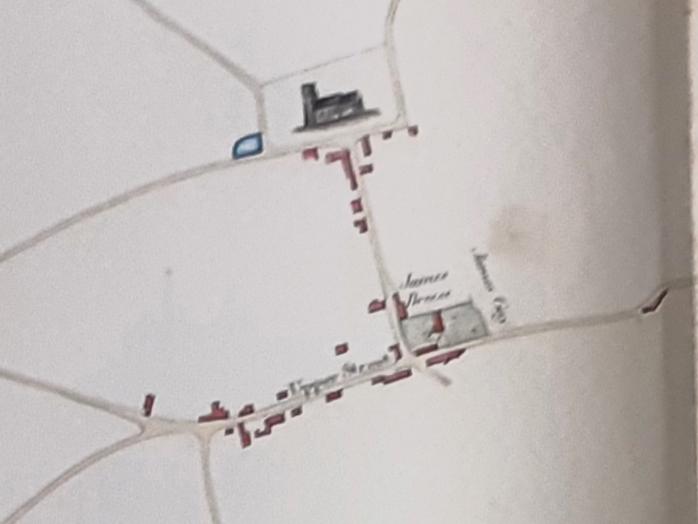
The 1784 Gunton Estate map shows Church Farmhouse as belonging to the Gunton Estate.
The farm was acquired by James Gay in 1839 and farmed by William Seago. The only William Seago listed in the census for that time was an agricultural labourer living in Upper Street. In 1860 the farm and house were bought by the Buxton Estate. In 1919 the farm was sold to the sitting tenant William Bartram; the censuses from 1871 show William Bartram as a farmer living in Upper Street. The 1911 census confirms the address as Church Farm. William Bartram died in 1920. His widow Rachel died in 1931: the farm and estate stayed in the Bartram family until 1975 when the farm and house were sold.
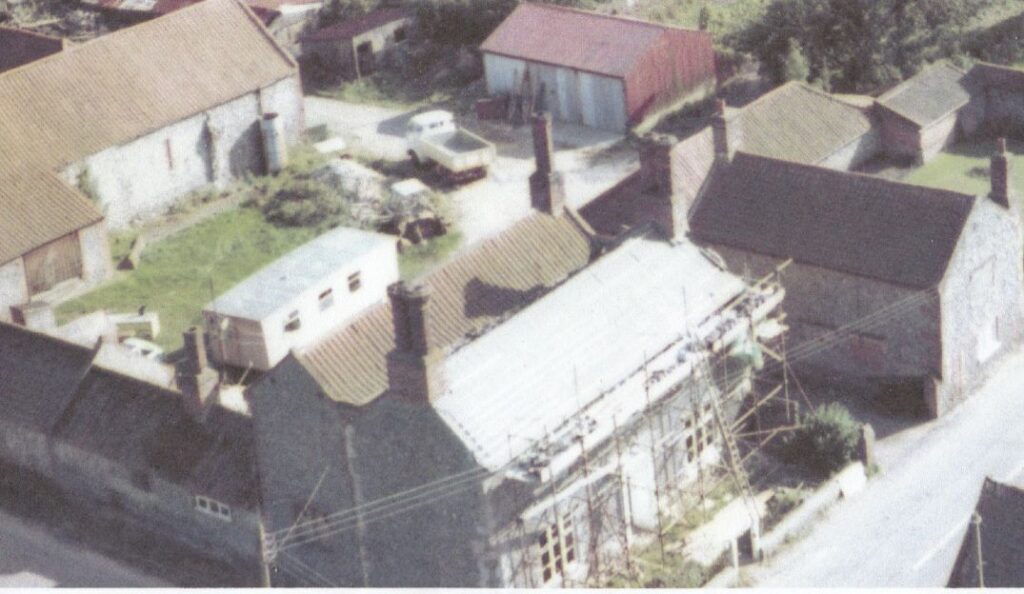
Roger Codling bought the house and surrounding farm buildings in 1975. Roger took many years restoring the house and developing the surrounding buildings. On its completion Roger moved into the house. It was sold to Peter and Olga Richardson in about 2016. It was sold again in 2024 to its present owners Douglas and Pieter.
The property was grade two listed in 1976.
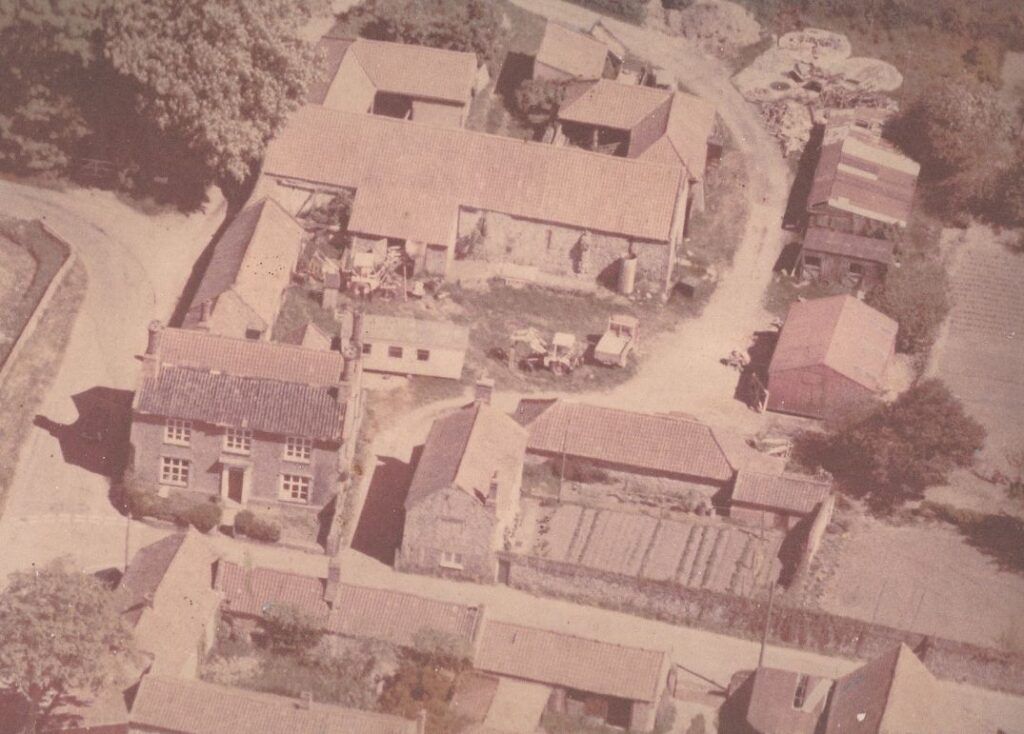
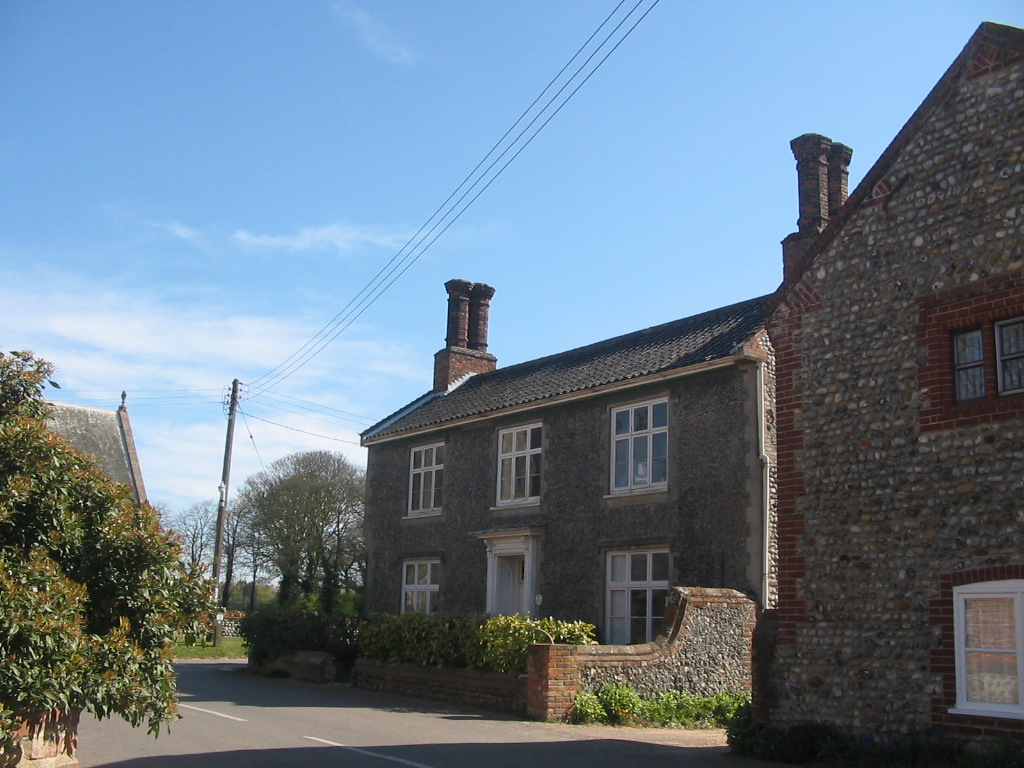
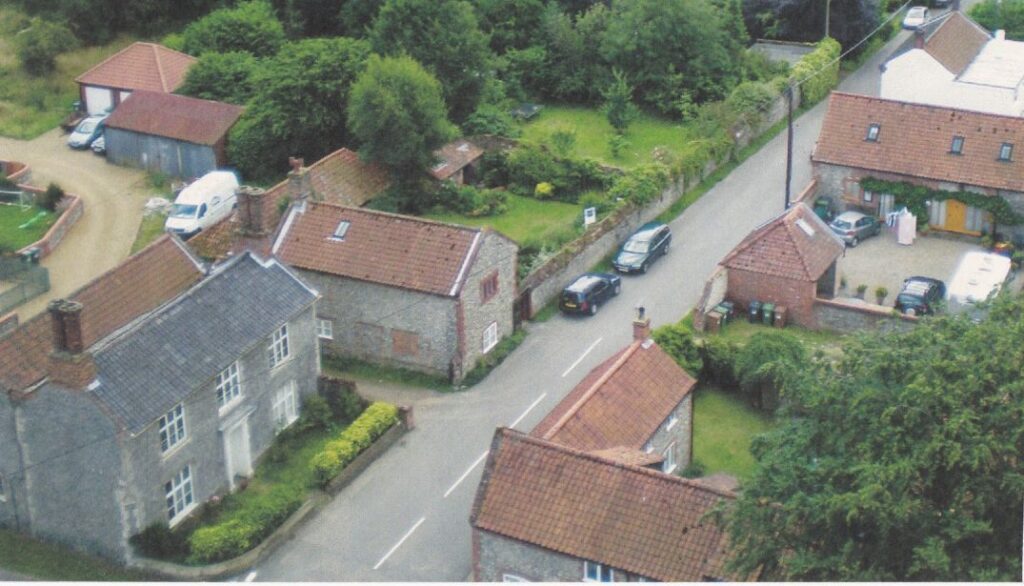
Church Farm Cottage
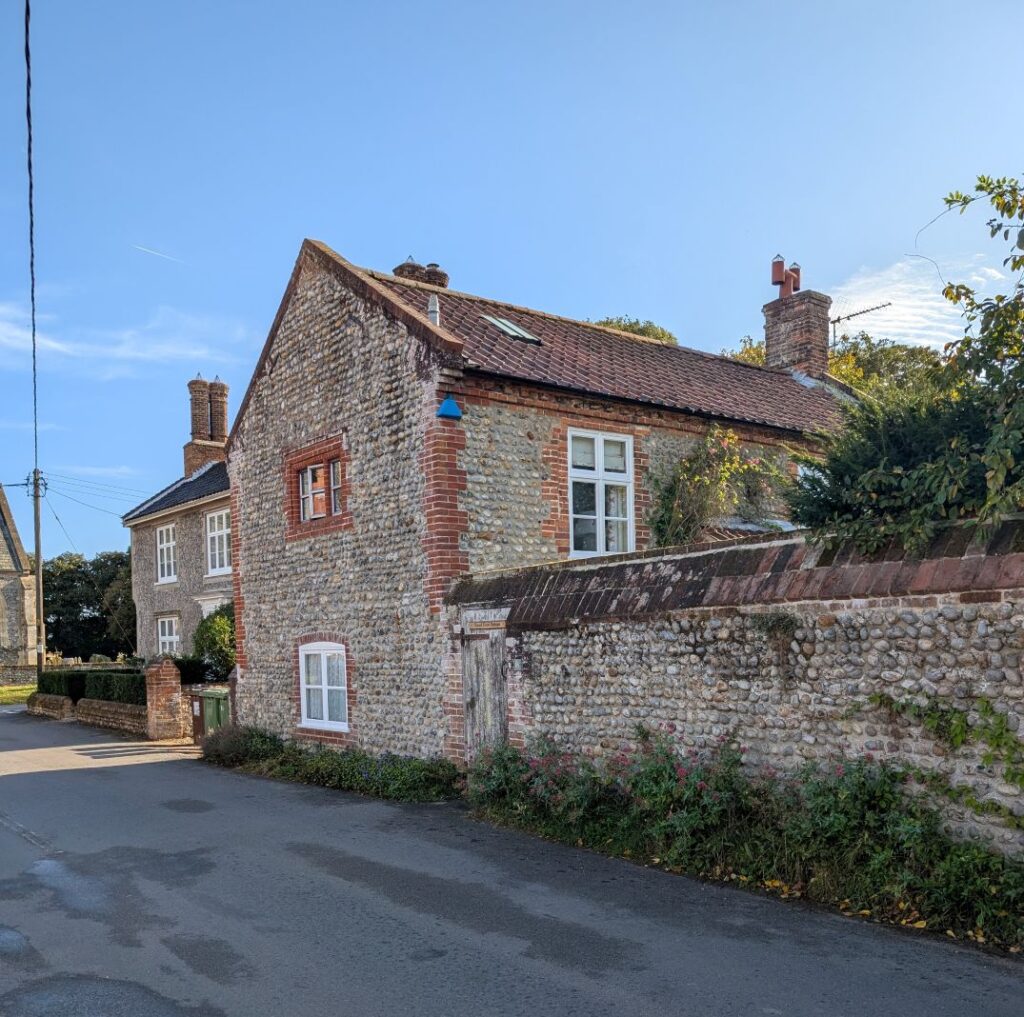
Church Farm Cottage has a very interesting history and we thank the current owners for allowing us to publish what has been found out about it. As can be seen from the Gunton Estate map at the top of the page in 1784 the cottage belonged to the Gunton Estate.
A report by Susan and Michael Brown of the Norfolk Historic Buildings Group was carried out for Penny Clarke, the owner in 2003:
Comments and interpretation:
The chamfer stops in the mantle beam and the principal joists and the diminished haunch sofit would indicate a date in the first half of the 17c.
The cottage is listed (owners information) as being two cottages. Undoubtedly it had at least two doors which would have made conversion at a later date very straight forward. However the first floor was constructed as an unheated single space which, with two doorways would indicate non-domestic use. There may be a church connection for this building since the two are so close together, only the farmhouse and the road is between them. Documentary research may reveal some of the history of this unusual building. Some of the suggestions to consider for the first floor could be a marriage feast room, a court room or a school room, all with access from a separate stair. The ground floor east could be accommodation with access to the floored attic for a custodian or similar. The west end room could be a reception/waiting area for the first floor or a shop (third doorway?) It is possible that the land within the wall (extending towards the south) may have been the property of the church.
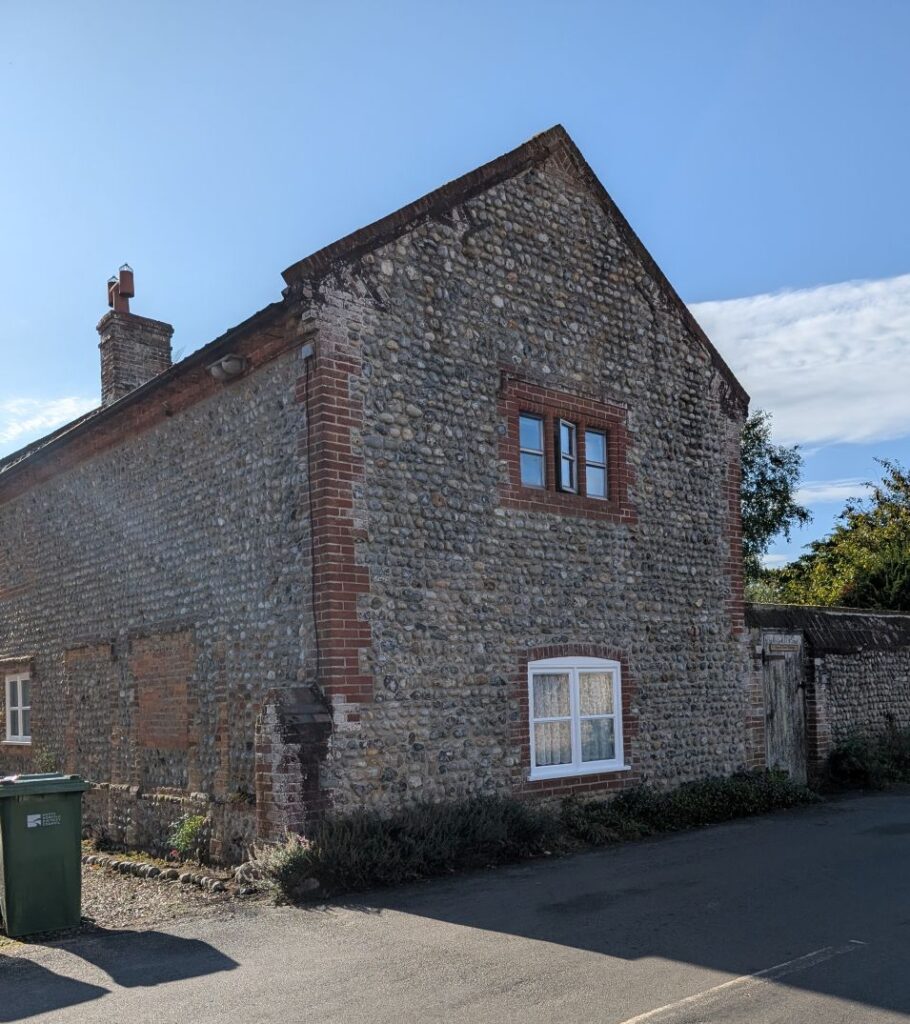
Copy of the report:
This cottage is a full-height two-storey building in brick and coursed flint cobbles. The roof is presently covered in pantiles but there is photographic evidence (very early 20c) of the roof being thatched and a crowstep gable to the east. The west end of the cottage is aligned to the road and there is a flint and brick wall extending to the south. Both the cottage and the wall are grade two listed.
The west wall is a late twentieth century reconstruction and the first-floor window with its brick mullions is a copy of the original. The first floor and two ground floor windows in the south face have been Georgianised by changing from ‘landscape’ format to portrait by narrowing the window and dropping the sills. Some of the bricks were reused and there is a straight joint to the west for the infill. The east side of the brickwork and the lowered (into the plinth) ground floor sill seems to be of Georgian or later brick. The first-floor window heads are flat and the ground floor are a flattened arch. The east gable wall has two small windows: one to light the attic stair and one to light the north space next to the first-floor chimney. There is a later single storey ground floor extension. The north face has two identical blocked doorways to the west end of the cottage. Between the westernmost door and the west gable wall there is a short vertical section of original brickwork. Was this another doorway? There is an existing window to the east on the ground floor. At first floor level there is a blocked window to the east. These windows have brick hood moulds. The track next to the north face is between the cottage and Church Farm leading to the farm buildings at the rear.
The ground floor has two rooms that were entered originally by the doorways mentioned above. The rebuilt partition has its original transverse joist with peg holes at 36inches. There is no evidence of an original doorway in the partition, but it could have been inserted between the studs. The axial joist in both rooms has a chamfer stop of a stepped shield and notch. In the west room the northwest end of the axial joist has a simple chamfer where the usable timber has ‘run-out’. There is a later chimney stack in the southwest corner. At the east end of the cottage there is a rebuilt hearth with its original mantle beam. The mantle beam has a single taper burn and elaborate chamfer stops of a jewel, at stepped shield and a notch.
The brickwork and mortar to the rear of the hearth has been lined to take ruddle. To the south of the hearth the interior wall is curved which may be for a stairway or an oven. The space next to the north side of the hearth has been made into a passage and all original evidence has gone.
The first floor has two transverse joists with step shield and notch chamfer stops. The common joists have housed diminished haunch soffit tenons to the principal. There is no evidence of any partition in the sofit of the principal joists. There is no provision for a first-floor hearth. The ground floor joist is tenoned into the face of the chimney and there is no evidence of corbelling to support a hearth. The stairs to the attic rise to the south of the chimney with their small window for light. As there is an identical(blocked) window to the north of the chimney stack it maybe that the ground floor stairs were in what is now the passage.
The attic floor has a ‘modern’ roof of machine swan softwood. The side purlin in the northeast bay has the remains of a Baltic shipping mark The purlins are boldly shaved and slightly staggered which may be an approximate copy of the earlier roof.
Following on from the report Penny received the following letter;
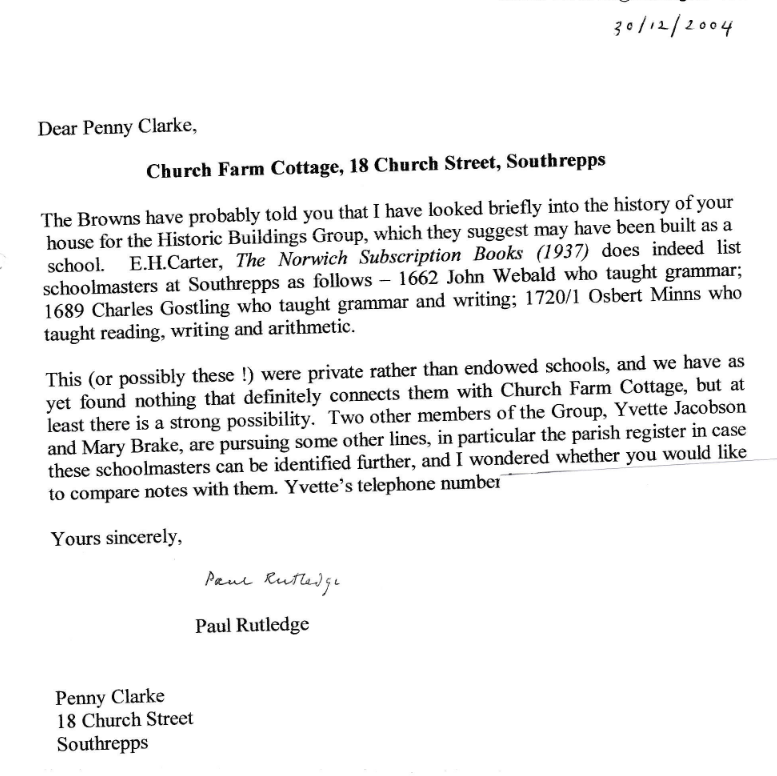
Penny’s conclusions in 2007 were:
Everything I have learnt since the report by the Browns of the Norfolk Historic Buildings Group suggests that it was not built as two cottages, the division into two came later, as did the buildings decline into a rather poor domestic dwelling(s). The flue from the fireplace, now only visible in the attic, is far too large for a cottage half the size of the existing whole.
There is a view as yet unproved, that if it was not a school, it might have been a guildhall. Many villages had one including Trunch. Although originally associated with the church, a village would have needed some such meeting place once using the church was no longer permitted and the use of the church porch as a place for business and the preliminaries of marriage and baptism, also ended, generally by the mid 16 century Church Farm Cottage is of course, not as early as this, although according to Pevsner it is 17th century, which fits with the school masters. Altogether very intriguing!
Penny did say that she had a copy of the cottage with Church Street showing the Church with the chancel roof raised and Church Farm Cottage with a crowsfoot gable and thatched roof. If anyone has a copy of this we would be very pleased to hear from you.
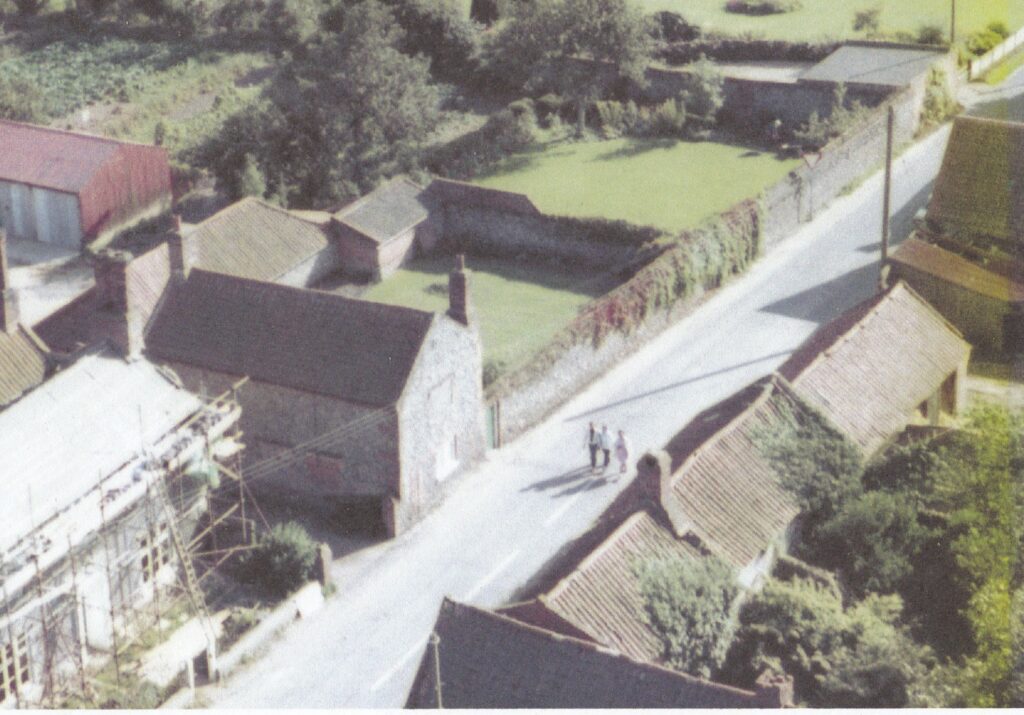
The 1784 Gunton Estate map shown at the top of this page shows that the Estate once owned the cottage and all of Church Farm. In 1839 the Southrepps Tithe apportionment of 1839 lists James Gay and his wife Mary as the owner of the cottage and the occupier as Spurrell Plumbley.
The cottage was sold to the Bartram Estate probably in 1919 when William Bartram bought Church Farm. On the death of Nancy Bartram in 1975 the cottage was sold to Marlton Properties Ltd, who then in 1978 sold it to Denis John Marlton. It was Denis Marlton who renovated the cottage. Penny Clarke bought the property in 1999. The present owners bought the property from Penny Clarke.
Homelea
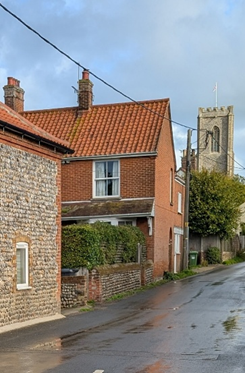
From documents we have seen the buildings on the site of Homlea in 1784 belonged to the Gunton estate, they appear to consist of two cottages and a shop. The copyhold to the properties was sold to Sarah Elizabeth Golden in 1896. There is a Sarah Elizabeth Golden listed in the electoral role for local elections of 1889 which list Sarah Golden as a cottage owner in Upper Street (Unmarried women ratepayers received the right to vote in the Municipal Franchise Act 1869; the assumption is that included widows). In 1881 Benjamin and Sarah Golden are living in Upper Street and he is listed as retired shopkeeper: he is significantly older and died the following year (Benjamin with his first wife ran the shop in Lower Street ). Sarah died in 1906.
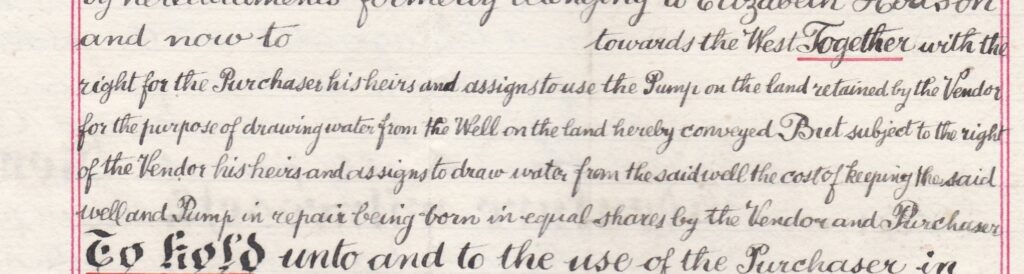
James Bowenis the next owner. In 1893 on the electoral roll James Bowen is listed as the owner of a shop and cottage in Church Street. James (retired railway contractor) and his wife Georgina nee Fox lived on Church Street in 1911. An Elizabeth Bowen is living in Church Street and listed as shopkeeper in 1891 and retired shopkeeper in 1901. There is no evidence that they were related. In the conveyancing document to William Brown Dix there is a clause about the well which suggests members of his family live close by.
William Brown Dix ( Browny)
He bought the two cottages and shop from James Bowen in 1920. He also owned number 7 Church Street. William was born in Southrepps in 1864 died 1937. He was a gamekeeper. In 1887 he married Alice Galley and they had one daughter, Evelyn(Eva). At first they lived at the Dams, then moved to Warren Road in Lower Street. Alice died in 1917 and three years later William married Kate Brock. At the time of his death they were living at number 9 Church Street and Evelyn was living next door and running the shop. On his death he left number 9 and another cottage (which we believe was number 7) to his second wife Kate (Betty Shaw who lived at number 7 remembers her parents paying rent to Mrs Dix).These properties then went to Eva on Kates death in 1967. The other cottage and the shop were left to his and Alice’s daughter Eva. At the time of the sale in 1920 one of the two cottages was occupied by Elizabeth Steward nee Pardon, a widow. And the other by John Knights, his wife Agnes and their two sons Harold and Raymond. John was running the greengrocer and Eva Dix was assisting. John was also a pork butcher and was running the shop in 1911.
Eva Dix.
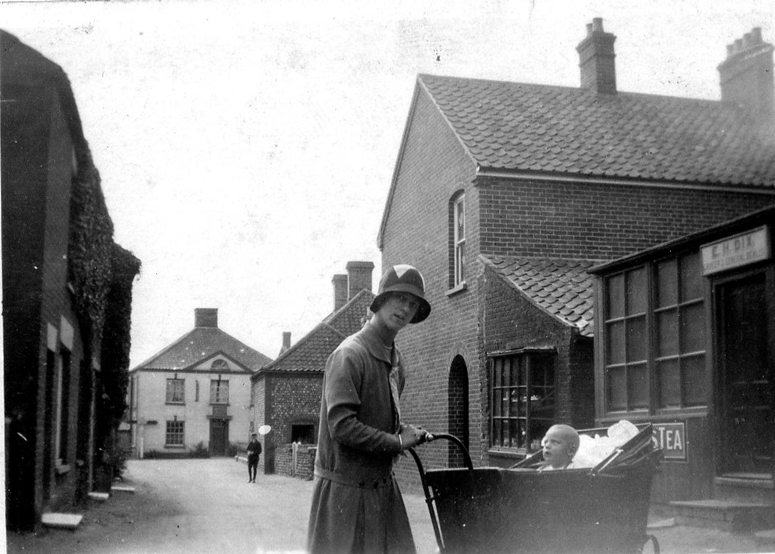
Eva was born in 1888. She lived with her parents in Warren Road and in 1911 she had no occupation. By 1921 she was still living with her father and stepmother but was now working in the shop on Church Street. In the 1920s she knocks down the existing cottage and builds Homelea. The shop is left intact. In 1928 Eva married Walter Green of Cromer, who was a carter.
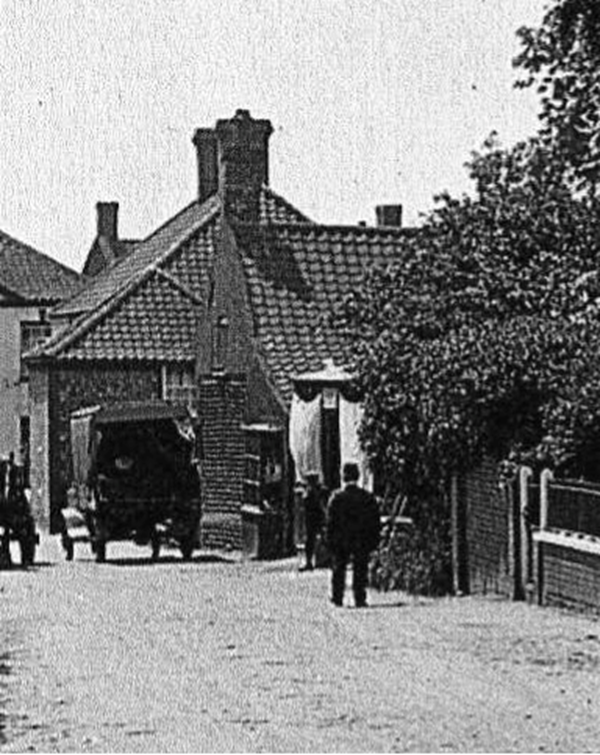
Homelea in the1940s – the shop can be seen as a separate building at the back. Walter continued the cartering business from the building that is the other side of the telegraph pole. In 1951 Walter died and it was after this that the shop was let to the Lawrences who lived on Clipped Hedge Lane.
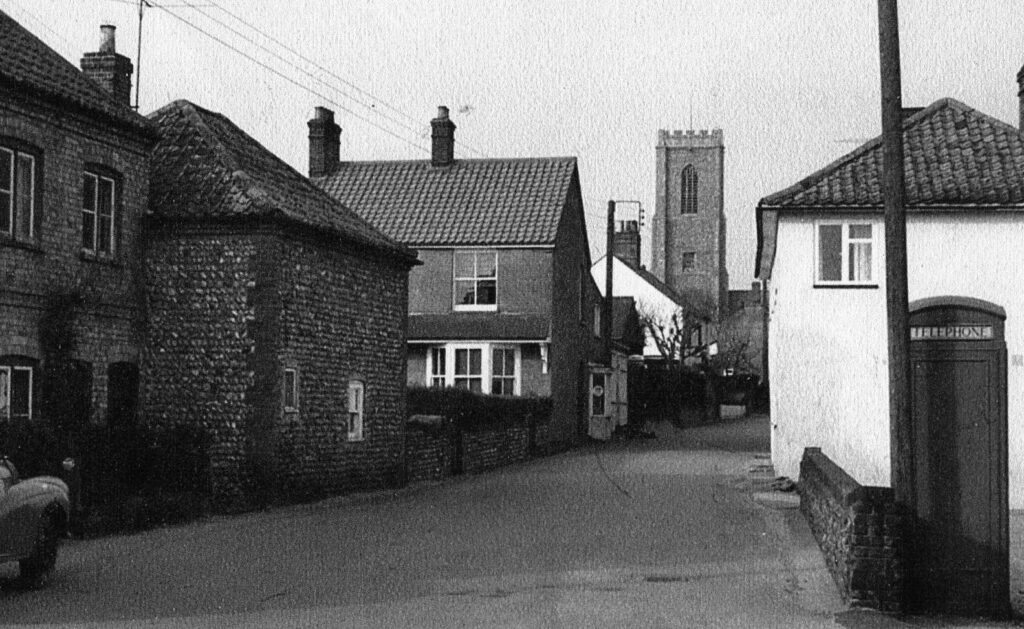
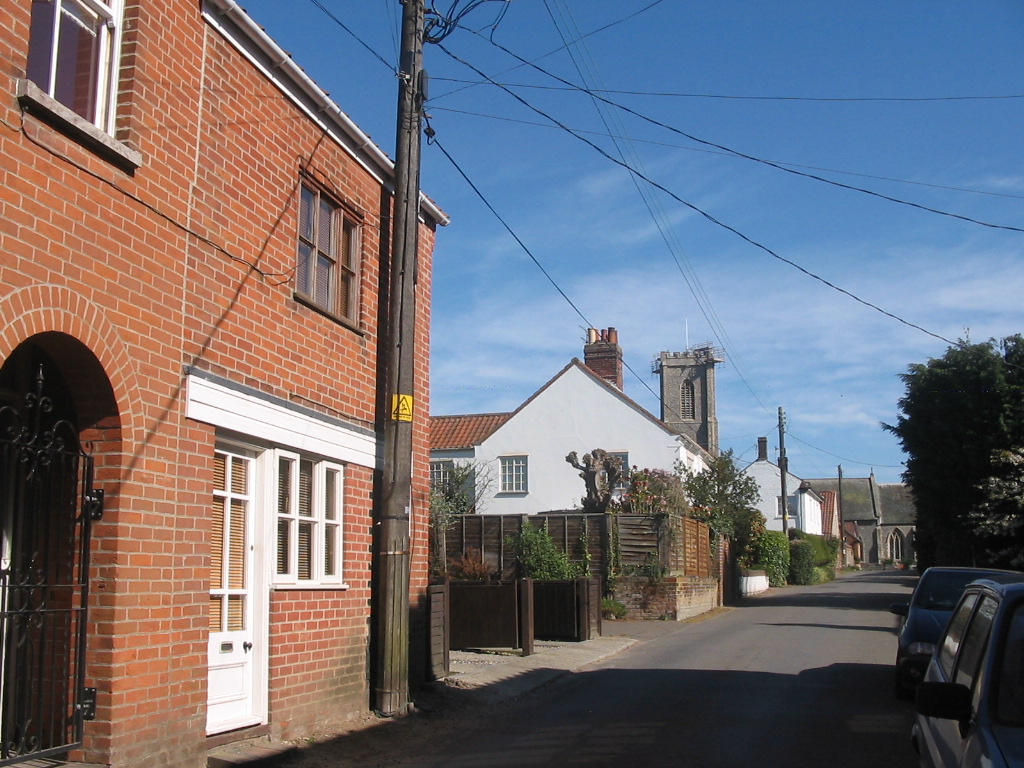
It was around this time that the house and shop were altered again, with a room built over the shop and the frontage changed. In 1964 Eva married again, to Canadian Percy Cox, and it was at this time that Anne Daniels rented the shop and ran it as a haberdashery. When Percy died in 1967 they were still living at Homelea . The next occupant was Ibby Chapman who ran a hairdresser from the shop. Its next incarnation was as a Junk shop run by Melita Brown. The shop finally closed with Eva’s death in 1979. The property was left to Lillian Royall who sold to Marlton Properties, who already owned Church Farm Cottage. The garage next to 11 was also transferred to the ownership of Church Farm Cottage. Then in 1987 it was sold to Melita Brown. At some point it was altered again to how it looks today, with the old shop now a separate dwelling.
Throughout this time number 9 has remined unaltered.