AN ARTIST OF DISTINCTION AN INFLUENCE
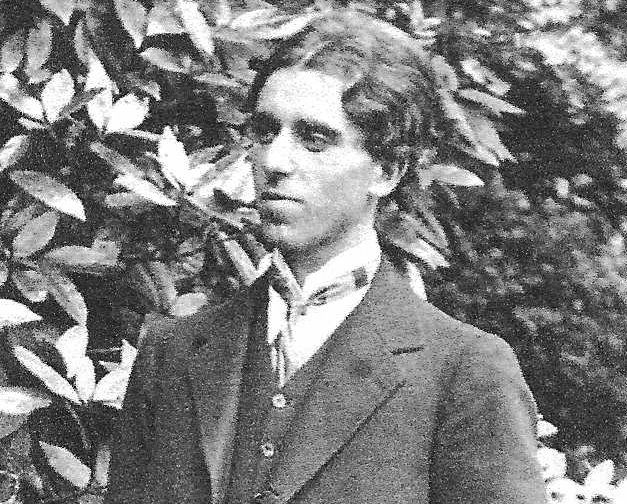
Claughton Pellew was a North Norfolk artist of some fame with an interesting life story. He and his wife Ketchie Tennant also a talented artist, spent most of their working lives in North Norfolk. Claughton died in 1966 aged 78, and his wife died in 1968 when she was 80 years old both having lived for some 40 years in the house that they had built on the Mundesley Road, “The Pightle”.
Pellew was born in Cornwall in 1890, one of five children of mining engineer father William Pellew-Harvey and an artist mother . The Harvey family were over generations rooted in the history of mining in Cornwall. His father’s mining career took the young family to a remote mining town in western Canada where Pellow spent much of his childhood.
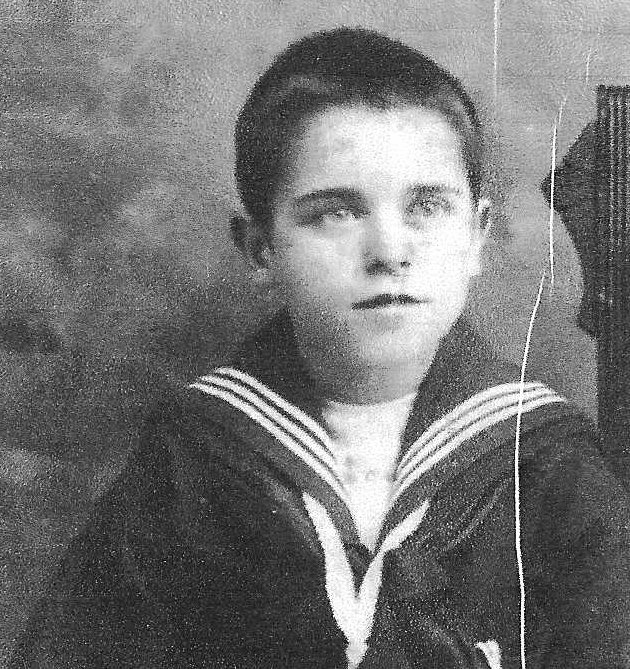
Pellew returned to England and in 1907 he attended the Slade School of Fine Art in London, contemporary with the likes of Stanley Spencer and Paul Nash. Following his student days he rented a studio in London, however he longed for the country. Having spent family holidays in Norfolk he decided to settle in the county and took lodgings in Mundesley.
At that time he spent some months in the Catholic Presbytery in Cromer with Father Harold Shelley Squirrell. Squirrell was educated in Germany and was proficient in the history of German art and literature. He subsequently became a member of the Guild of the Pope’s Peace. Edward Wadkin was a friend and associate of Squirrell . He was an ardent pacifist who subsequently became a highly controversial activist author advocating resistance to conscription during the Second World War. Is likely that under their influence Pellew was encouraged to live and travel in France, Austria and Italy including time spent in Assisi. Father Squirrell had international political and ecclesiastical contacts which he shared with Claughton.
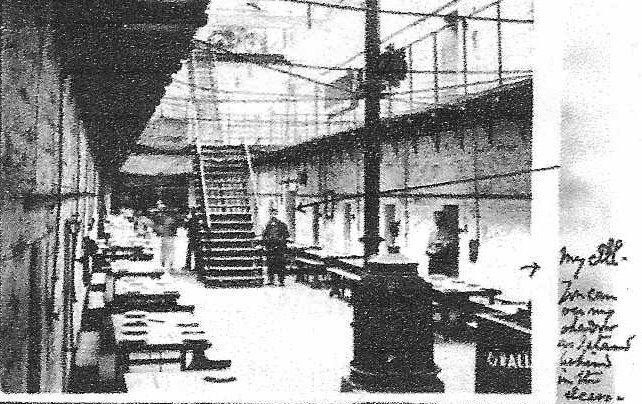
In 1914 Pellew was received into the Catholic Church and declared himself a conscientious objector when he was called up for service in the First World War. For his absolutist beliefs, which were sincerely held, he was punished. He spent two years in prison including periods of hard labour in Dartmoor.
In 1919 he married Emma Marie (Ketchie) Tennent whom he had known for many years. She had studied at The Slade and also become a Roman Catholic. They rented a house in Overstrand called “The Pightle”. Their great friend John Nash, the lesser known artist brother of Paul Nash, later suggested that Pellow never fully recovered his wartime experience, which left him with a permanent sense of isolation, and may have influenced his decision to settle in a remote rural area of Norfolk.
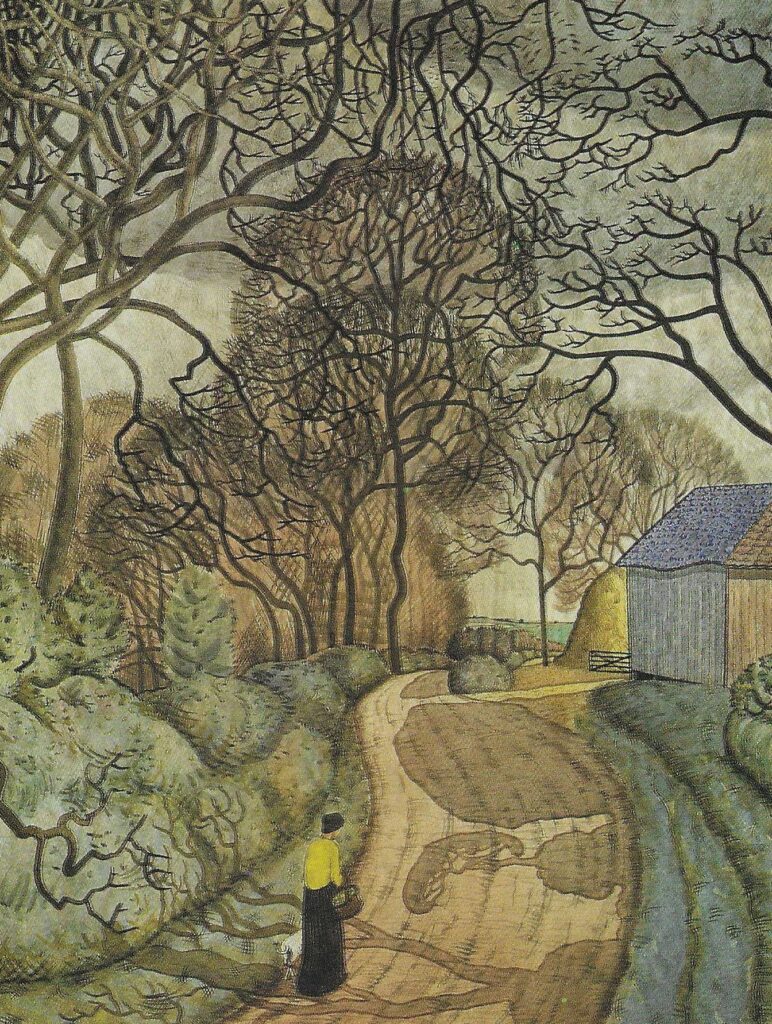
Pellew was at his most productive in the 1920s. Pellew worked in glowing watercolour enriched with ink and pastel, then later with oils.

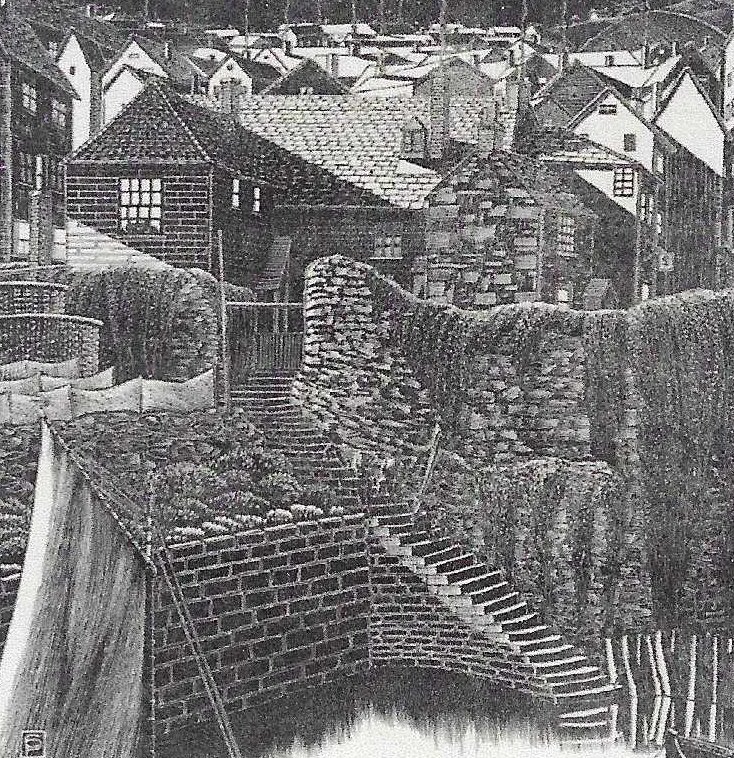
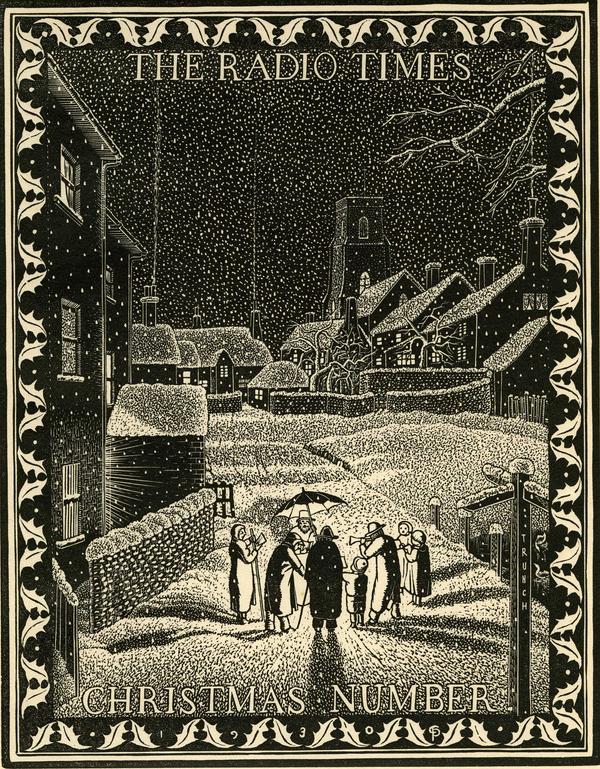
The decade also witnessed a revival in the art of wood engraving. Pellew was one of its greatest exponents , enormously inventive in design, texture and his mastery of light and shade, especially his nocturnal scenes.
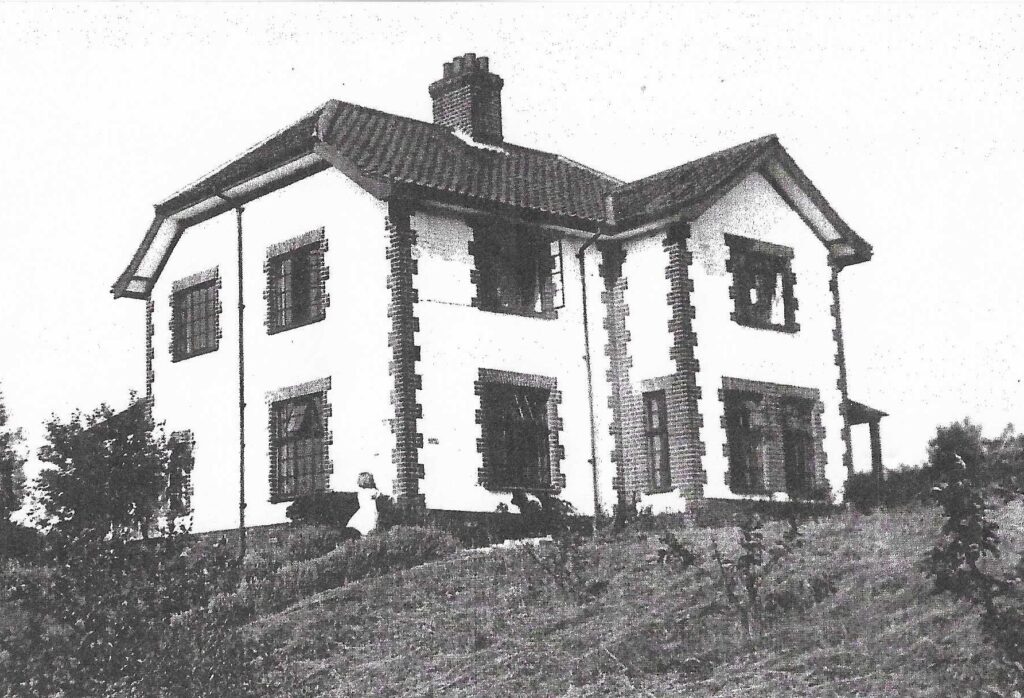
In 1926 the couple purchased a plot of land in Southrepps which included part of a former marl pit on the Mundesley Road to the east of Southrepps. They had a house built to their requirements by a local builder including a separate studio and they moved in 1927. They called their house The Pightle.
The Pellews maintained contact with their friends in Austria and had prolonged holidays in Bavaria. The lakes and fine mountain scenery had great appeal for them, and much of their time was spent drawing and painting. Much of this work formed the basis for an exhibition of their work at the Goupil Gallery in 1927.
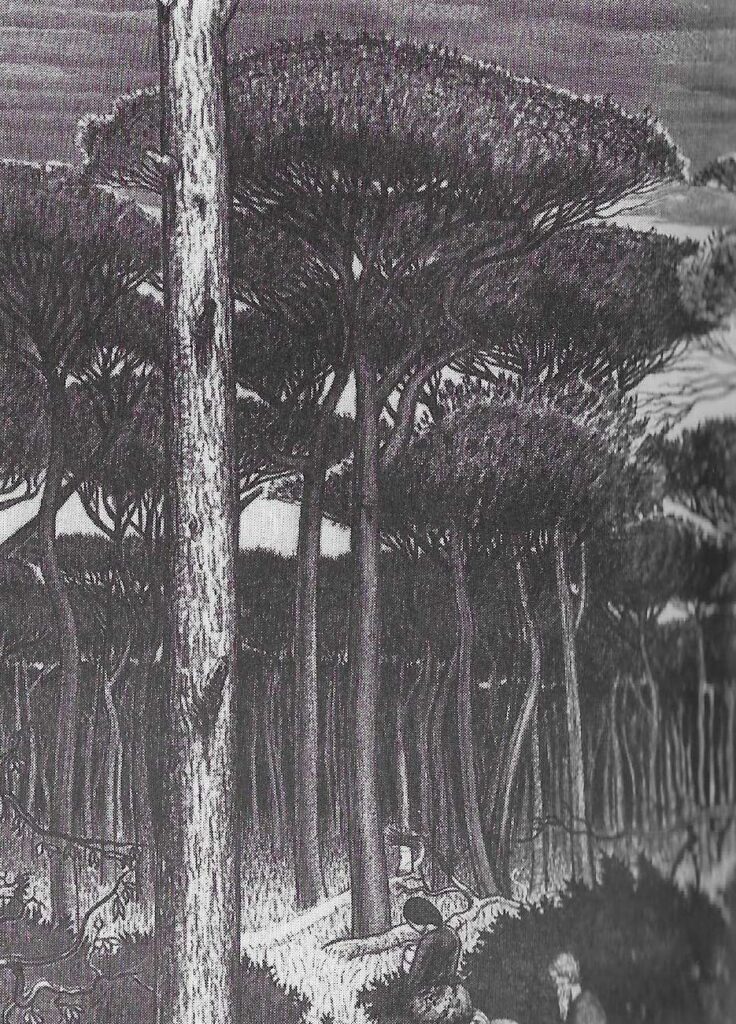
Bavarian holidays and memories of Claughton’s earlier travels in Italy were the inspiration for much of his wood engraving and etching at which he excelled.
The Pellews studied German literature and art and were fluent in the language. They regularly corresponded in German with their German friends. At the outbreak of the second World War , Claughton’s correspondence was intercepted by security officials and he was briefly detained having been arrested as a spy at Gunton Station.
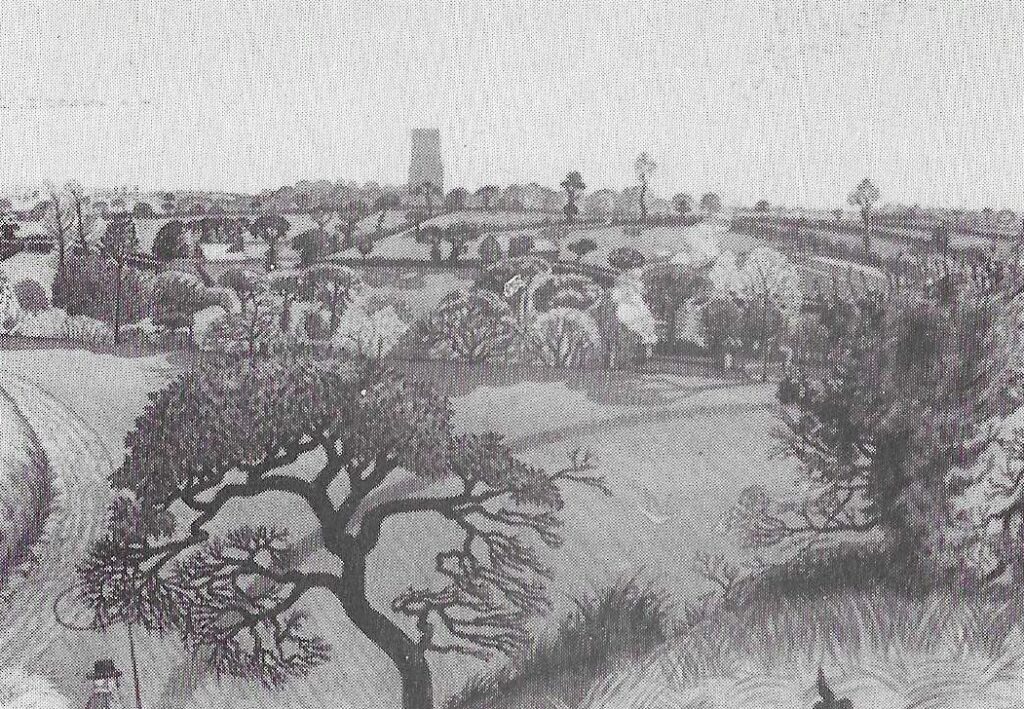
Their house was set high and prominent in the landscape and over time they witnessed great changes to their distant views especially the removal of Southrepp’s ancient hedges and woodland before and after the war by the East Anglian Real Property Company. They could see the embankment of the railway from Overstrand to Cromer before its closure in the 1950s and from their house over the fields towards the west they could see Southrepps Church.
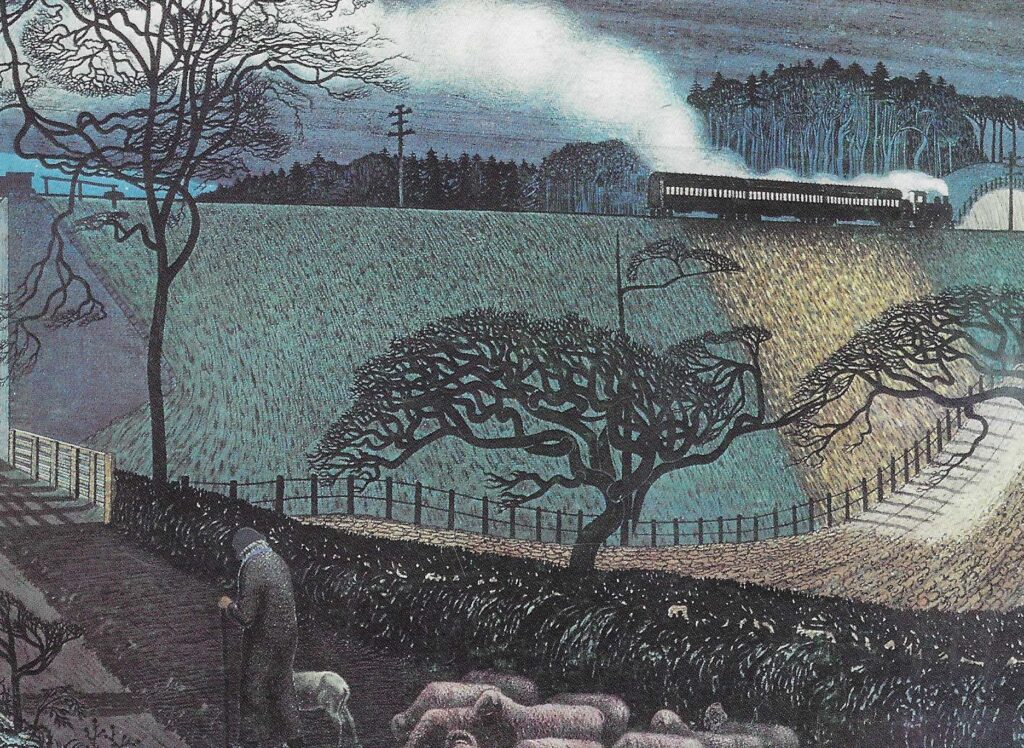
Pellew’s work includes scenes viewed from their home, views of Trunch and the lanes and farms around Gimingham .
One of his best known works was for the 1930 front cover of the Radio Times. It depicts a snowy scene in Trunch with Carol Singers.
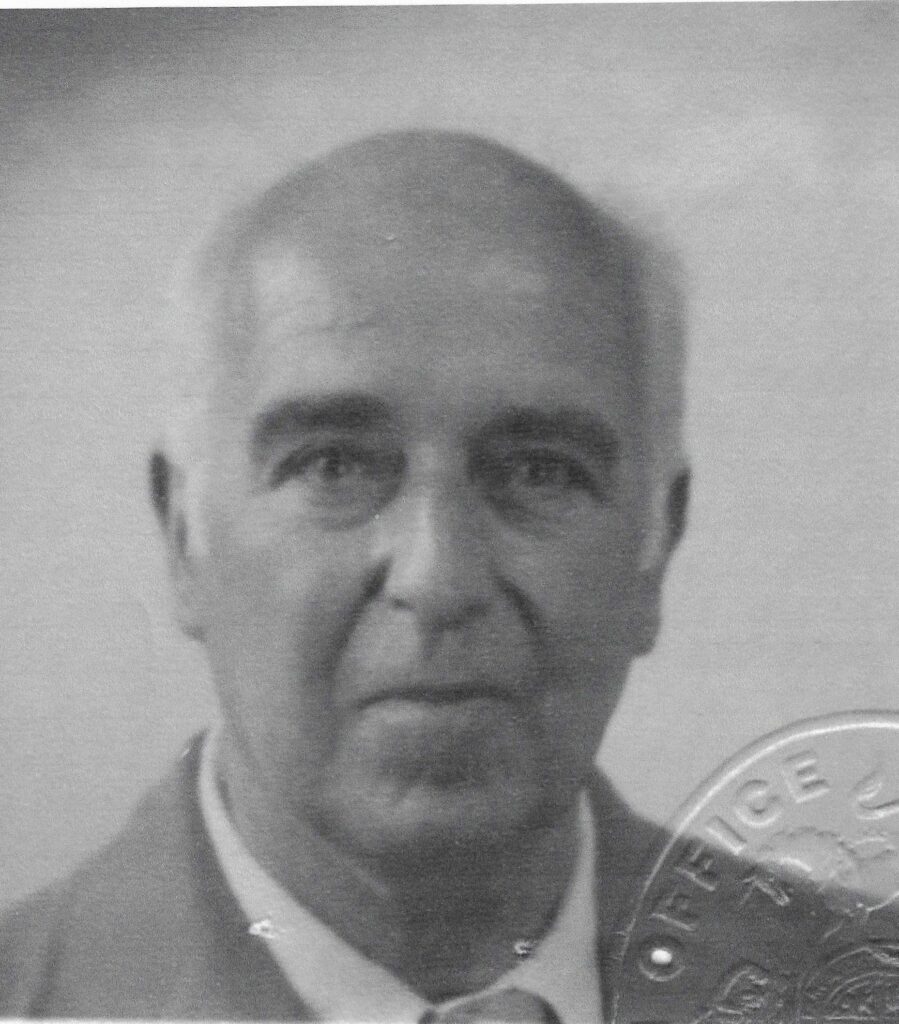
Claughton and Kechie lived modestly at the Pightle for 40 years. They adopted their young orphaned niece Anne Tennent (Pam). They shunned publicity and the pressures of commercial life. The Pellews did not have a car but, especially Claughton cycled into Southrepps and Trunch regularly.
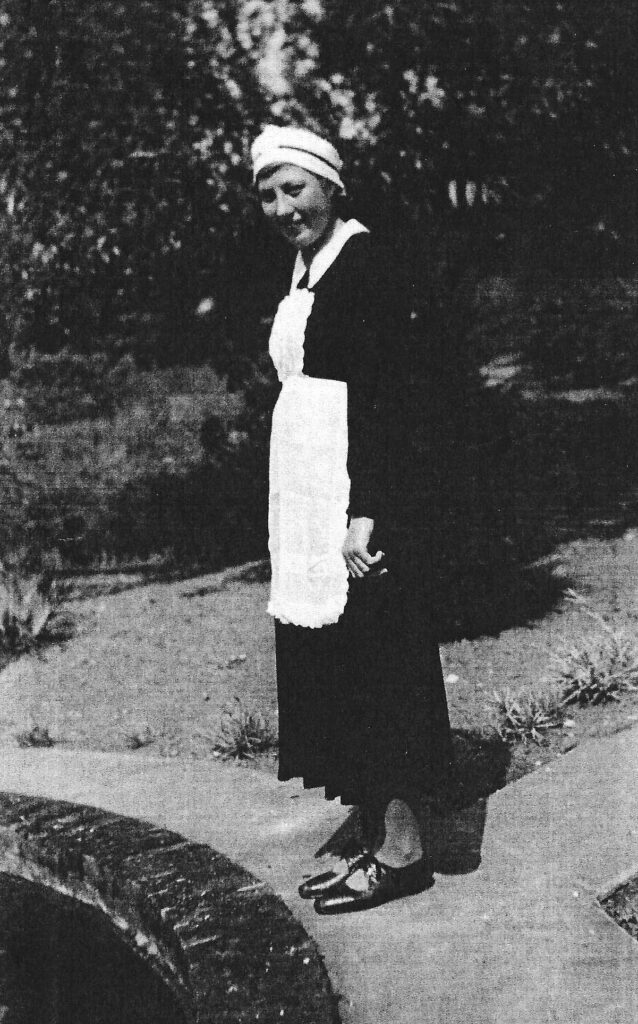
For many years local girl Olive Burton-Pye worked as a maid for the Pellews. The household was quite formal and Olive in uniform was required to address the lady of the house as”ma’am”. She recalled the work as hard but she remembers Claughton as a real kind and caring gentleman.
The Pellews were Catholics but they chose to buried in unmarked graves in the peaceful churchyard in Gimingham. When Anne died in 2023 she chose to be buried beside them and the family erected memorials to them all. Representations of their work are carved into the headstones.
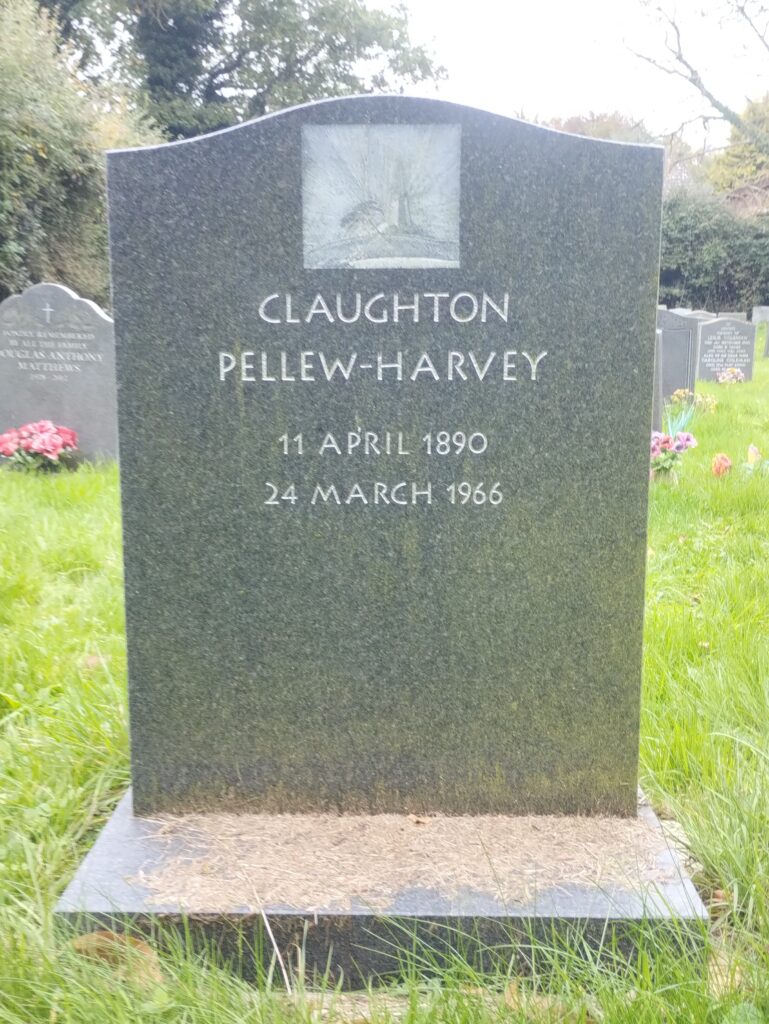
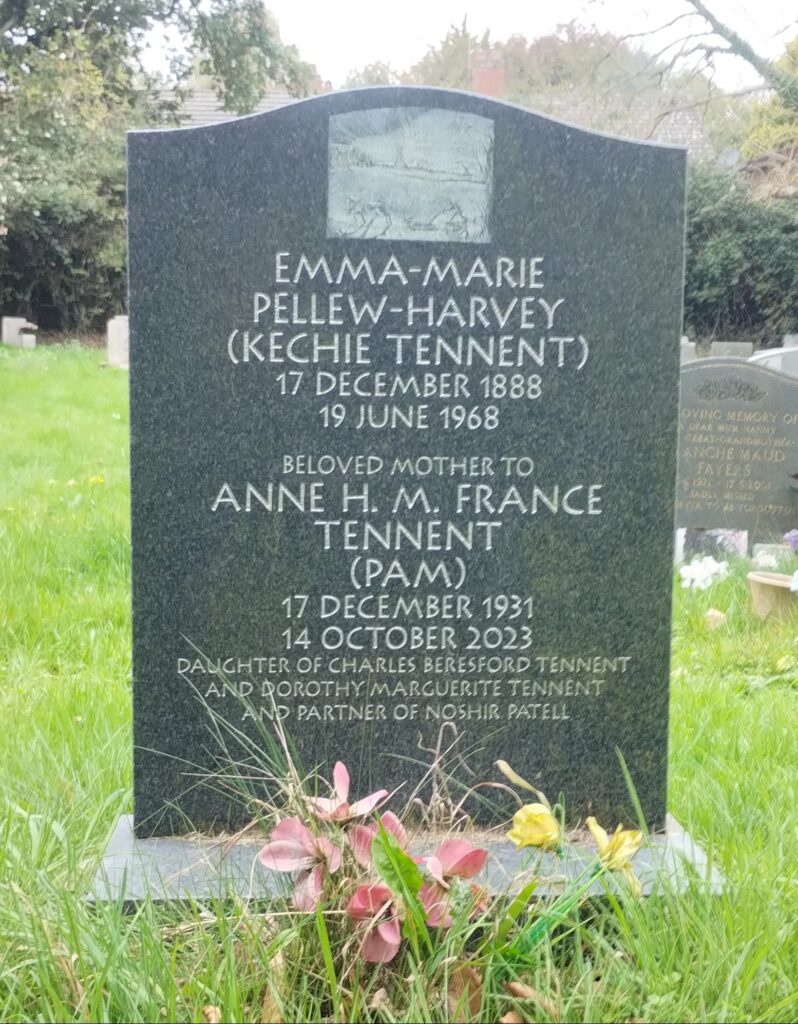
In his lifetime, Pellew’s work especially his woodcuts and engravings were admired by his peers but his main body of work had been completed long before his death.
The Southrepps Society Archive have a small collection of Exhibition Catalogues and memorabilia relating to Claughton and Ketchie Pellew. They lived almost equidistant between Southrepps and the village of Trunch. Trunch inspired many of their works of art. The Trunch History website has more information about them and a gallery of their pictures.
There is much more information on line and in publications including:
Imperial War Museum Website Lives of The First World War
https://livesofthefirstworldwar.iwm.org.uk/lifestory/7646306
Publication Claughton Pellew Canada and the Great War
Publication Ploughshare and Hayrick by James Methuen Campbell
Catalogue Cloughton Pellew Wood Engravings Ashmolean Museum
1987