Introduction
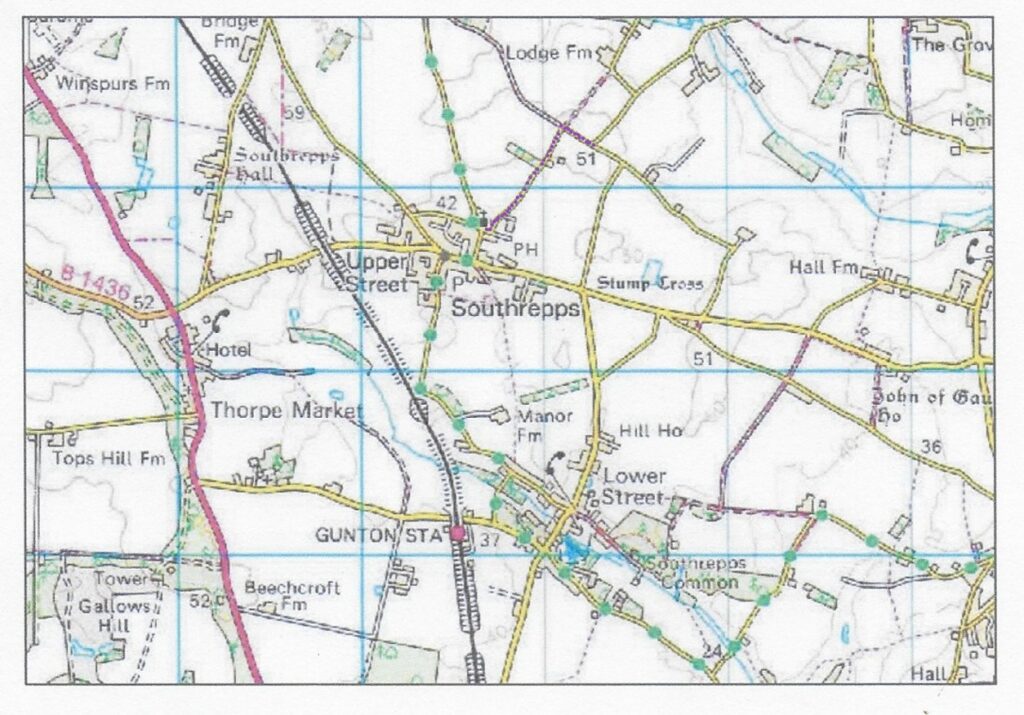
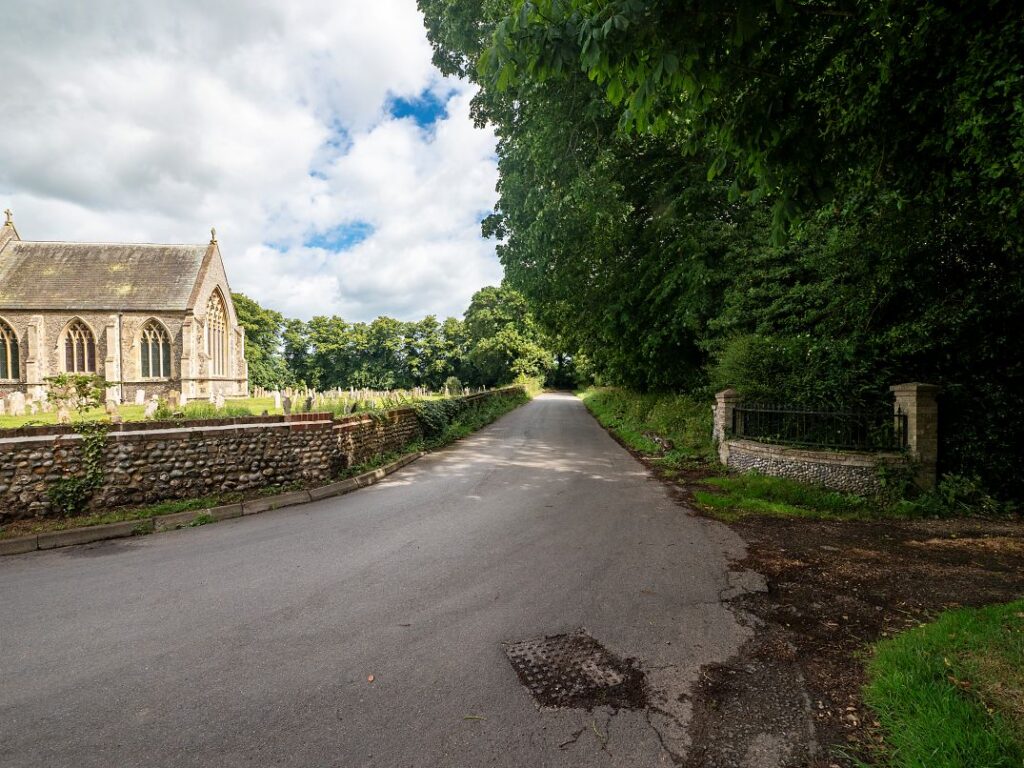
Whitegates Road runs up the East Side of St James and meets Wellspring Road at the junction with Cromer Road. It has a few houses at the Southern end but quickly goes into farm land with Southrepps Lodge Farmhouse at its most Northern point.
The Old Rectory
Author Louis de Soissons
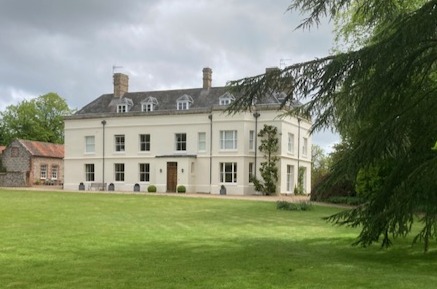
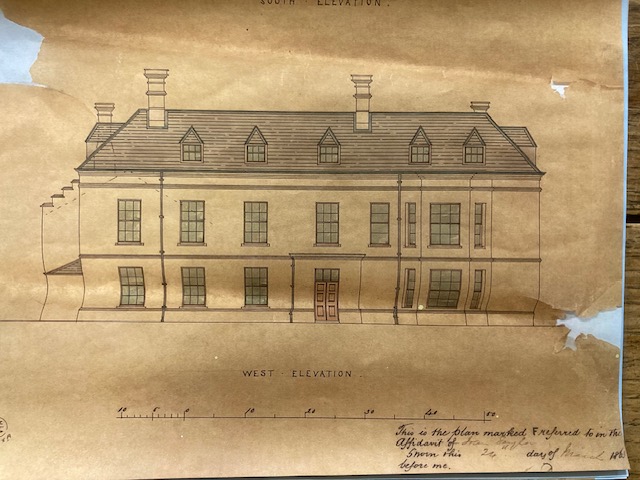
This handsome stuccoed house, facing east towards the
church, stands on the site of a much earlier Tudor building.
Some Tudor brickwork remains on the south east gable with the
remnants of a 17th century ornamental pilaster. Faden’s map of
Norfolk of 1797 reveals an E- shaped building and some of the
flint walls in the walled garden date from this time. The house
was considerably altered in 1830 and enlarged in 1863 when
the south and east fronts were stuccoed in the Neo-classical
style; the larger sash windows were added during this period.
HRH the Duke of Sussex (1773 to 1843) when he visited the
rectory in 1830 described it as “a neat mansion with a fine
garden“
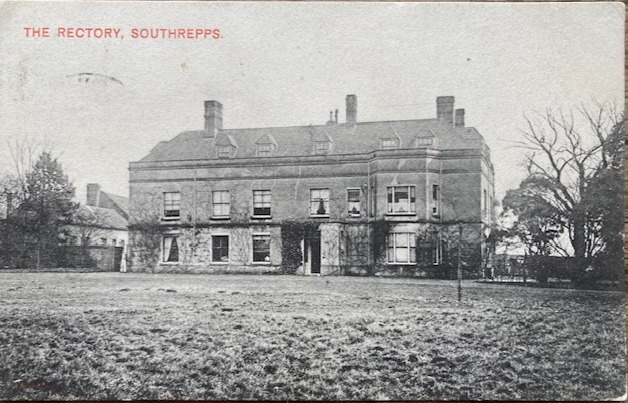
The Victorian service wing which projected from the house to
the north east and containing the kitchen, domestic offices and
servants quarters was pulled down in 1952 during the period of
post war austerity. The house was sold by the church in 1968.
Throughout much of the 19th century and up until World War I,
many of the rectors were members of the Harbord family from
neighbouring Gunton Hall. These include the Honourable John
Harbord with his 14 children. He was followed by Sir Frederick
Sullivan who married the Honourable Judith Harbord, daughter
of Lord Suffield. She had been Maid of Honour to Queen
Victoria. Queen Alexandra and Princess Victoria visited the
family at the rectory in 1902. Folklore has it that Lady Harbord
would run her white gloved finger along the mantle pieces in the
unused attics looking for dust! The Sullivans were followed by
the Barclays and the Reverend Humphrey Barclay was rector
twice at Southrepps from 1921 until 1925 and again from 1946
until his death in 1955. In the intervening period he was
domestic chaplain to both King George VI and Queen Elizabeth
II and helped prepare the late Queen for her confirmation. After
the house was sold by the church in 1968 there have been
various owners, firstly the Arnolds who ran a popular tea room
in the outbuildings and then the Keeling family. Louis and Anna
de Soissons have owned the property since 2002 and have
carried out a significant restoration and refurbishment of both
the house, garden and grounds. It has been a much loved
family home where they have raised their four sons.
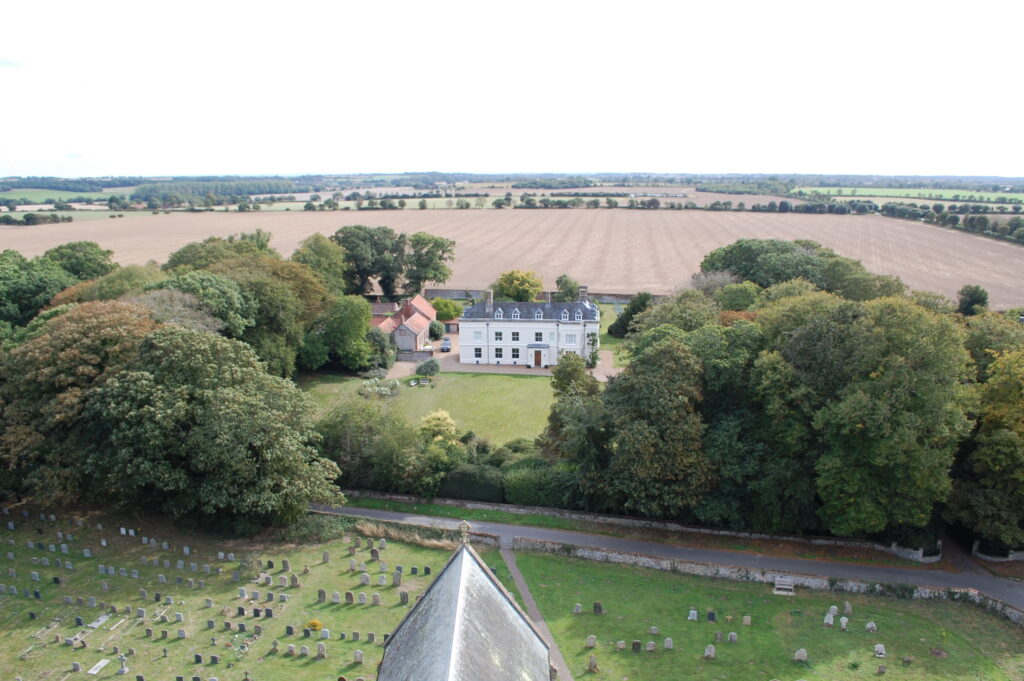
Over the centuries the outbuildings have had a multitude of
uses. The large tithe barn became the men’s club and every
Monday night many would cross the unlit garden (very dark in
the winter) and enjoy good company and the excellent snooker
table and table tennis. The sash windowed building next door
was once the laundry and in 1905 was used by the girls of
Antingham and Southrepps school for laundry lessons and the
barn for cookery lessons at the cost of 20 shillings for 20
lessons. This room was also used for other village activities. It is said that the Reverend Humphrey Barclay would ride his
horse into the now demolished kitchens and that his dogs
always accompanied him to church. The Reverend Tilney with his family was the last incumbent of the rectory.
Memories from residents of the village;
Rosemary fondly remembers Brownie sessions run by Mrs Tilney being held in the house and playing hide and seek through out the building. The Tilney’s also ran the Sunday School at the Rectory. Apparently there was some competition between the Church Sunday School and the Methodist one with sweets being amongst the inducements.
Two old boys remember scrumping apples and on one occasion being stopped by the village policeman, “show me your hands” the culprits turned their hands over, black from ‘liberating’ the walnuts from the tree in the garden.
When the Tilney’s were in residence Norman Hooker and his wife ran a youth club in the barn.
Patricia wrote to say,I remember the Rev Barclay very well. He prepared me and a group for Confirmation. I think the Confirmation was at Sheringham. This was about 54 or 55. I think many residents would have remembered the dogs. When he did a house visit the dogs always came to and they weren’t quiet. The Rev Barclay had a large flock of Moscova ducks which I admired he gave me a couple as pets, fortunately both male!!
Southrepps Lodge Farmhouse
Colin Needham
Southrepps Lodge farmhouse is one of the grade two listed buildings in Southrepps.
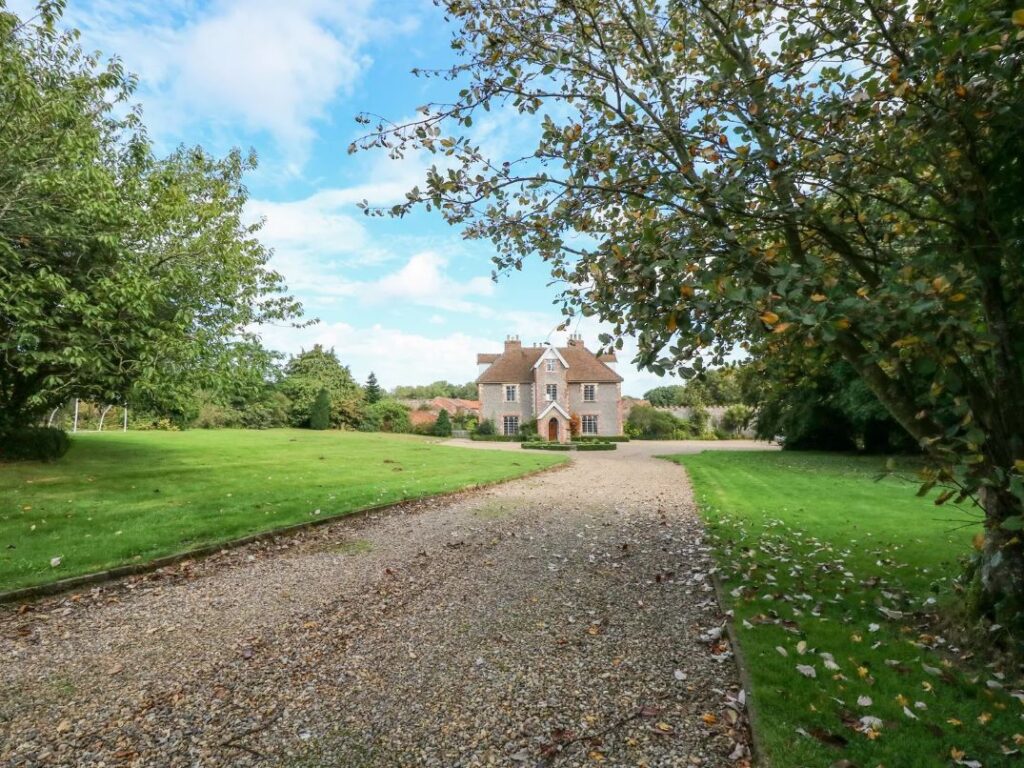
Grade two first listed 1988
House. Dated 1862 C.F. on porch, with late C16/early C17 wing to rear. Galleted flint with brick dressings; hipped slate roof and pantile roof. T-shaped in plan. C19 symmetrical facade of 3 bays, 2 storeys and attic. Casements under flat arches, each light having 2-centred arch glazing bars and leading. Central gabled porch with 2-centred archway; single-light casements to side walls; plank and muntin house door with overlight. 2-light casements to first and attic storeys. Bays flanking the porch have
a 3-light casement to the ground floor; 2-light casement to first floor;oversailing eaves. Hipped roof with 2-light attic casements in the gables having decorative barge-boards with drop finials. 2 stacks to rear wall. Earlier wing at right angles to the rear of 5 bays, 2 storeys with C19 casements and 1 sash with glazing bars; massive central stack with bases for 4 clustered shafts; gable end stack.
Our earliest records of the farm indicate that the estate of some 250 acres of agricultural land, wetlands and woodland was purchased by a gentleman named Cook Flower from West Beckham in 1813. The Flowers were farmers and one time Lords of the Manor of Sheringham. Cook Flower farmed the land around Sheringham Hall. He initially worked with Humphrey Repton to landscape the park. This work was completed after the sale of the Sheringham estate to Abbott Upcher in 1811.
Flower was named as owner and occupier of Lodge Farm in the Tithe records of 1839. Cook Flower died around 1856. At that time the tenant farmer was George Theobald, when the farm included lands in Southrepps, Northrepps, Gimingham, Trimingham and Sidestrand.
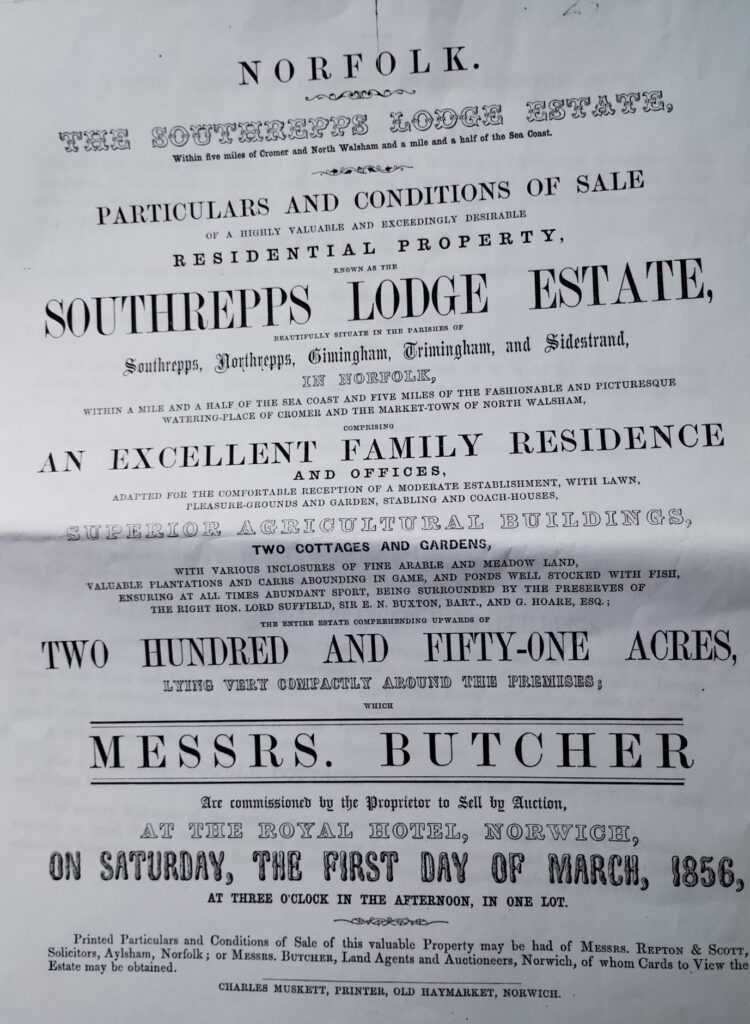
The sale papers describe the property as a highly valuable and exceedingly desirable residential estate. We do not know who purchased the estate when Cook Flower died.
“ the above property is worthy of especial attention of any gentleman in quest of a delightful Country Retreat in which agricultural pursuits may be profitably followed ; whilst, to a gentleman of sporting habits, it offers attractions rarely found , the plantations, Carrs, and ponds being in the centre of the estate and exceedingly well stocked; surrounded by the extensive preserves of the Right Hon. Lord Suffield, Sir E.N. Buxton, and G. Hoare, Esq and abutting on the lands of J.H.Gurney Esq., M.P. and Archdeacon Glover”.
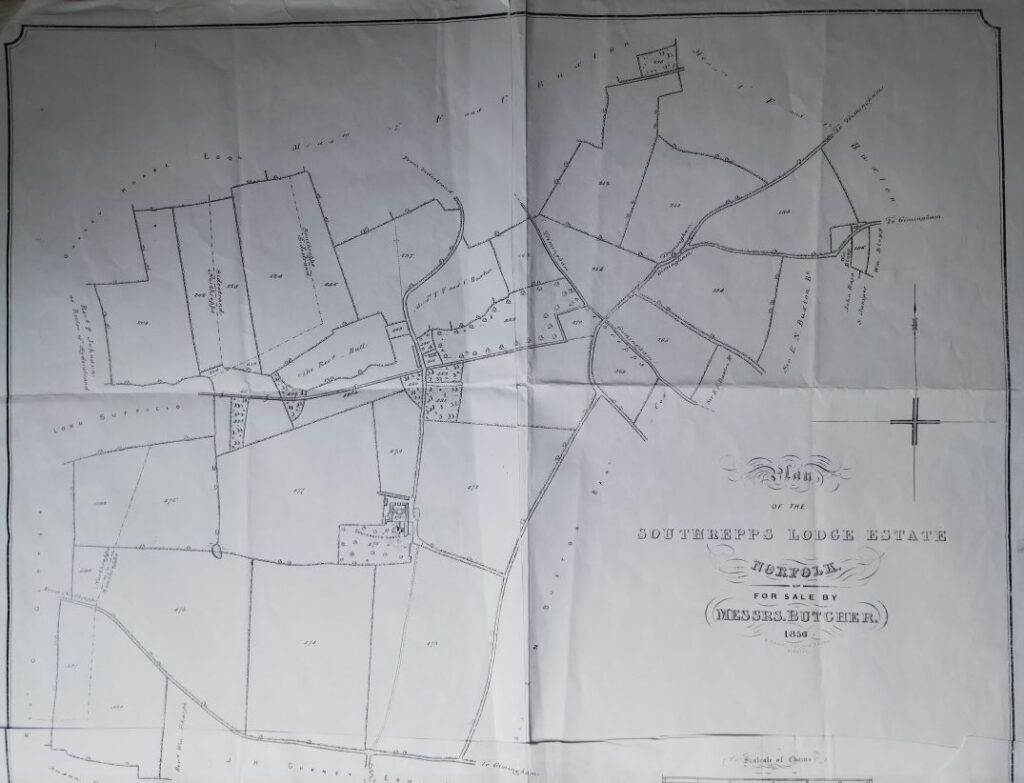
The map shows the farm in 1856. Sometime thereafter, the land in the other parishes was split off leaving a residual estate in Southrepps of about 160 acres.
After the first world war the Estate formed part of the lands owned by Sir Samuel Hoare. The tenant was George (Sloddy) Cubitt who also farmed at Hall Farm, Trimingham.
On Cubitt’s retirement, the farm was taken over by Ben Ling. In 1938 A.E.(Friday) Forsdick took over the running of the farm .
After the war the farm ownership passed to Paul Pagett (whose mother was a member of the Hoare family). In 1949 John Everett was appointed as Farm Steward and subsequently took over the tenancy. During Everett’s tenancy, Frogshall Farm, also owned by the Pagetts became vacant and he took on this land as well.
Paul Pagett’s brother Julian took over the ownership of both farms in 1960.
John Everett then bought the freehold of both farms in 1964. Julian Pagett retained the Lodge which he subsequently sold to the Wilcocks who later disposed of the house to Christopher Sladden (date not known).
On John Everett’s retirement in 1989, both farms were sold to Peter Sladden and are now part of the Southrepps Hall Estate (Wayware Ltd). John Everett moved to Blakeney where he died in 2012.
The late Alf Hewitt who lived in Palmer’s Yard off Chapel Street started full time work at Lodge Farm in 1930s and remembers Ben Ling and Friday Fosdick. In more recent times the late Mr Brock and wife worked for John Everett and lived in one of the cottages adjoining the main house before their retirement to their cottage off Sandy Lane.