Introduction
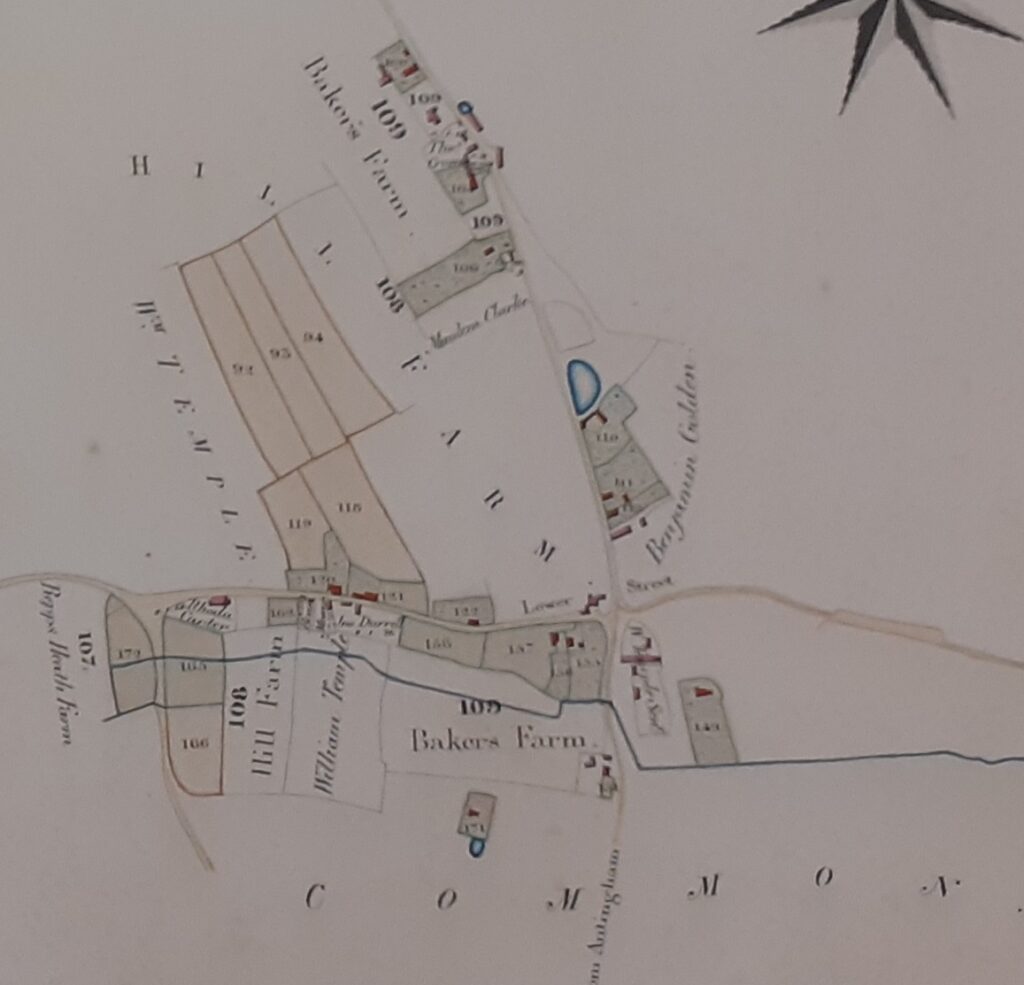
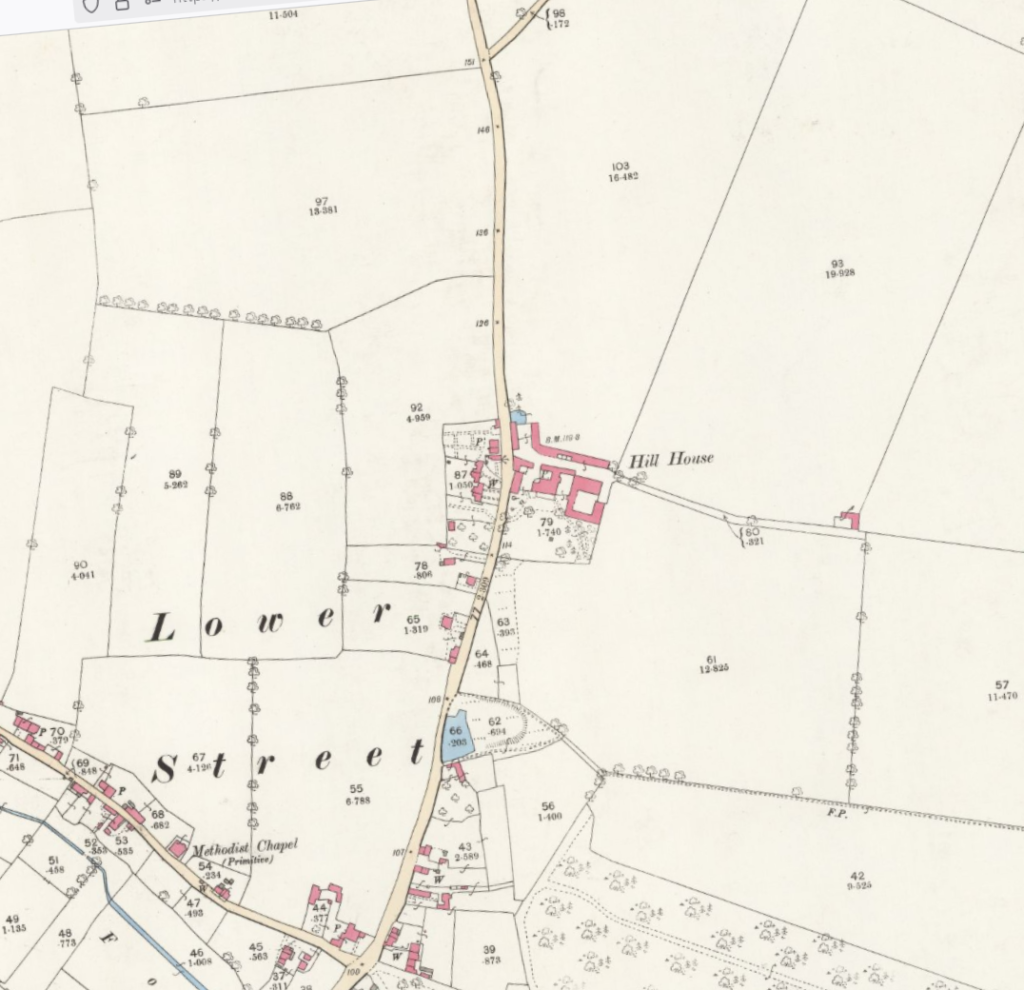
Pit Street runs from Stump Cross on the Mundesley Road to the crossroads with Chapel Road and Warren Road. For over half its length it passes along a sunken road between the fields of the Wayware estate. It has a mix of very old cottages found on the 1784 estate map and modern properties dating from the 1980s as well as two significant farm houses – Hill House and Garden Farm. Neither are shown on the Gunton Estate map as they were not owned by the estate. In 1906 the fields behind Garden Farm are shown as allotments, as is the field opposite the Pit.
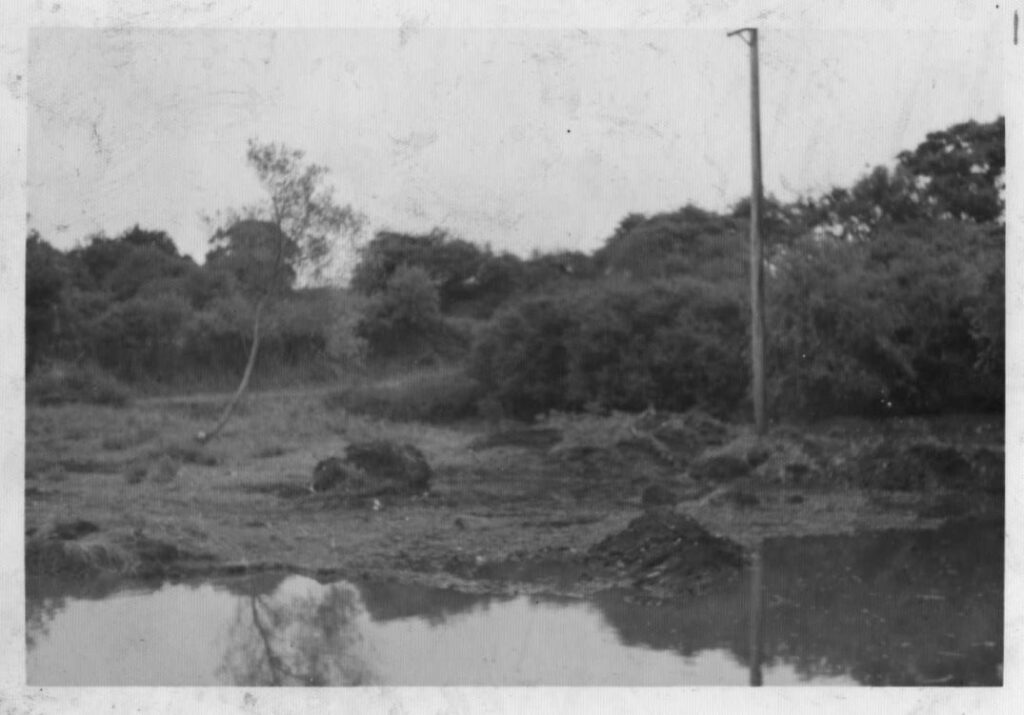
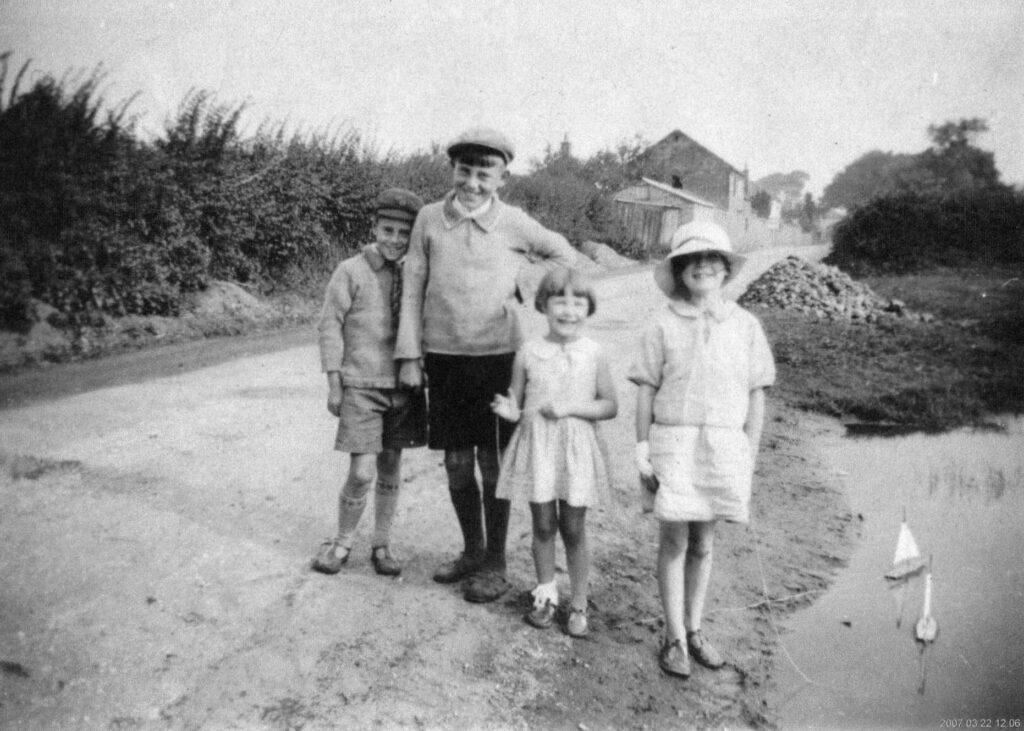
The road passes by the Pit, a pond formed from an old sand quarry from which the road got is name. This is now owned by the Norfolk Wildlife Trust and is an important breeding site for the common toad.
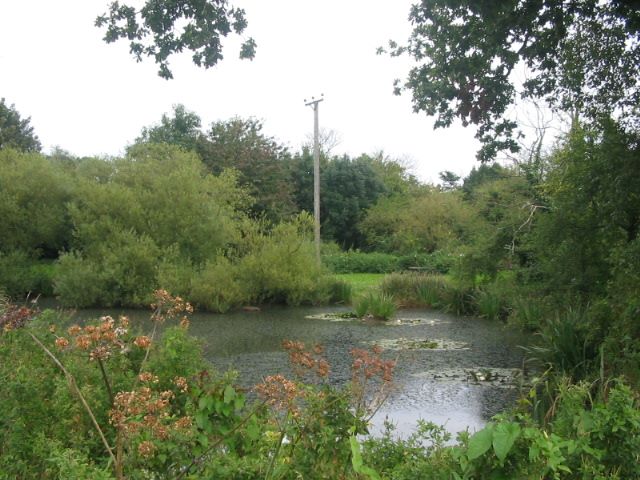
Sadly the Pit is at time of writing infested with Crassula Helmsii (also know as New Zealand pigmyweed) a plant that smothers all other plants.
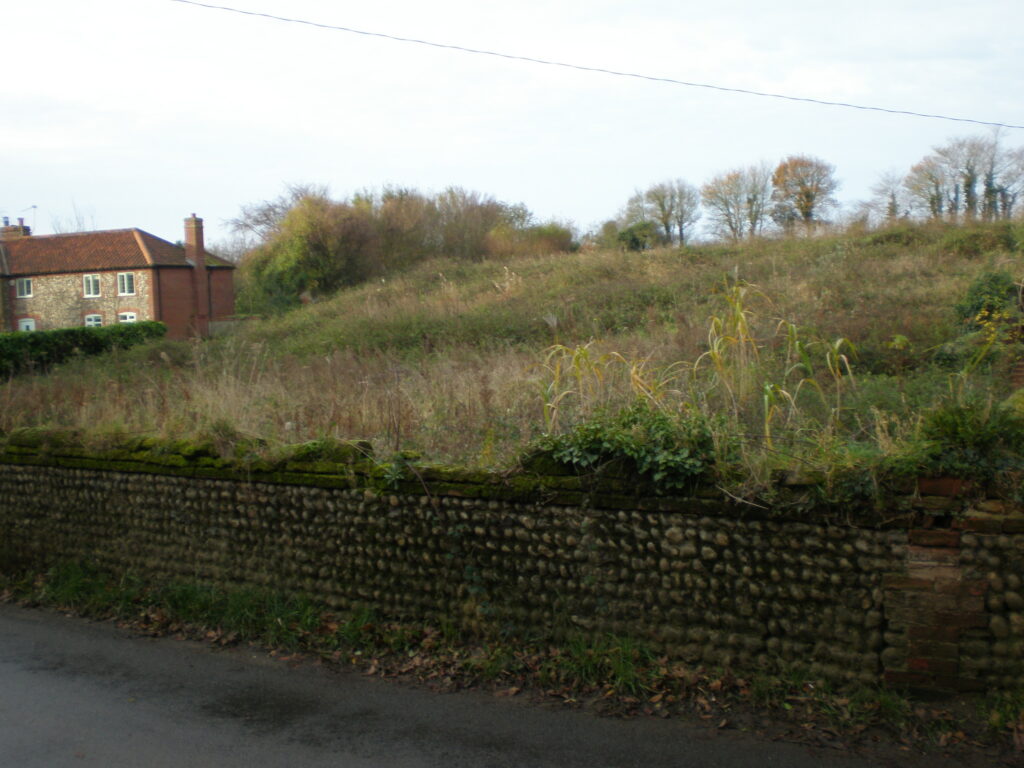
The newest property is the conversion of one of the Hill House barns to become Dragon Hall in about 2021.
Lilac Cottage
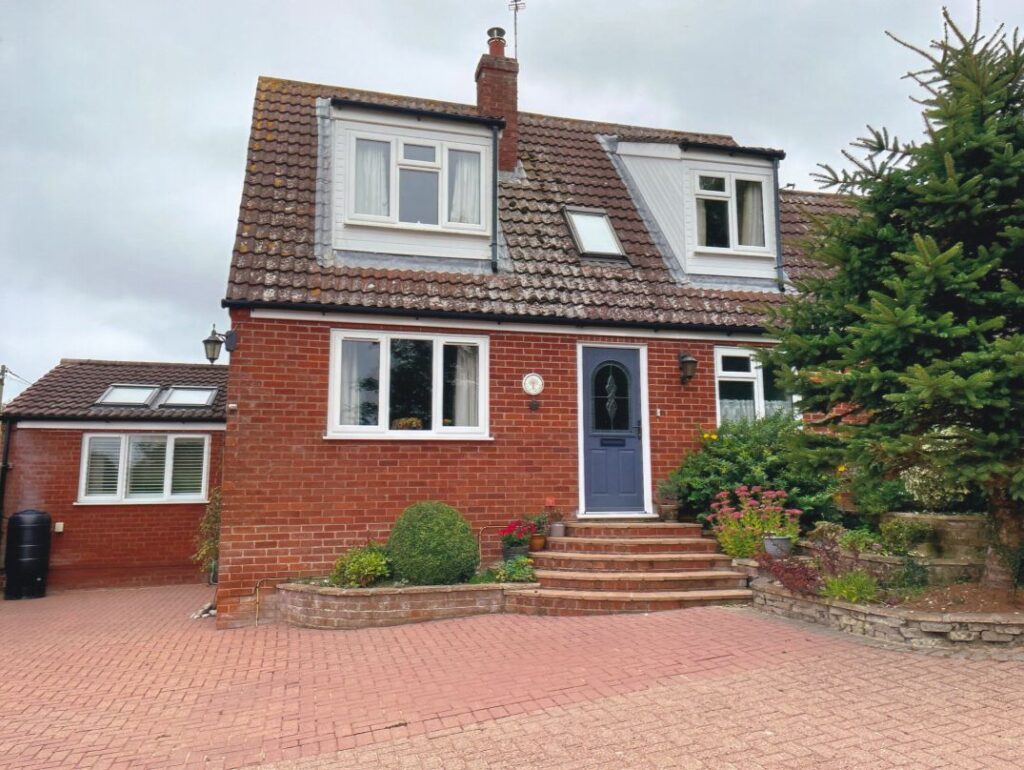
Lilac Cottage was built by Michael Drury in 1981. It is semi-detached with High bank. He bought the land for Lilac Cottage and High Bank from Alfred King of Trunch. Mr King had bought the land in 1977 from the estate of Laura Knights of Garden Farm who had died that year. His intention had been to build three houses on the plot and he had applied for planning permission in 1977. He never did build the houses, eventually selling the land to Michael and Mary Drury in 1980.
The land had previously been owned by Laura’s father Frederick William Knights and before him by John Knights and before him by her great great Grandfather Charles Knights, who died in 1916. It had previously been described as wasteland next to the Pit.
The house was sold again in 1983 to John and Mary Peck and again in 2004 when Rosemary and Allan Burrell the current owners bought it. The original house has been extended.
The Orchards
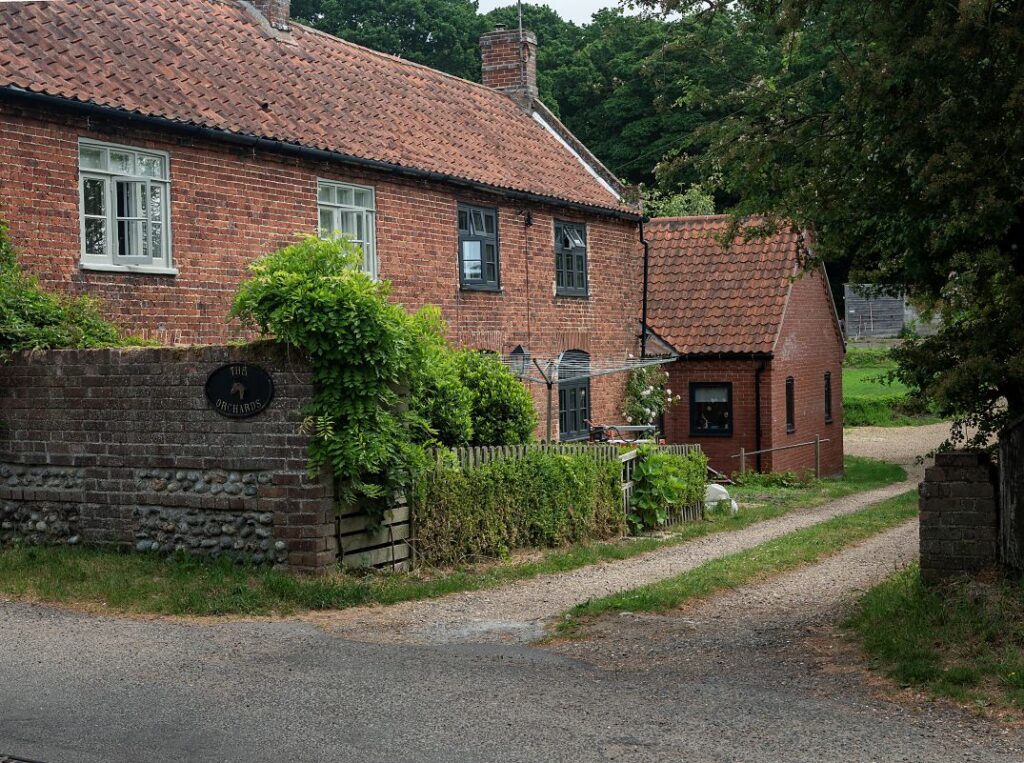
The Orchards is one of the older properties in the village; it is on the Gunton Estate map of 1784, the occupants being copyhold tenants of the estate. It is of brick and flint construction and lies at 90 degrees to Pit Street. It has over the course of time been three separate dwellings, two dwellings then one large house. In 2024 it is two dwellings again, one of which is a holiday let. It also now has a modern one-bedroom self-contained annex finished in 2024.
At one time the land attached to the Orchards contained fruit trees and a significant number of out-buildings, including a barn. The access to the property was via the drove road that ran up beside the pit, now a public footpath. This remained the access until the late 1950s. Some old documents of the house specifically forbade the cutting down of any of the fruit trees. There are no fruit trees left today.
The papers of the house show it to have been owned by the Gunton estate until 1913 when it was sold to Sir TF Buxton, who was a major landowner in the area. The earliest copyhold tenant that is recorded is Robert Bond who sold the tenancy to Daniel Cooper in 1793; of him we have no information.
There are two other names in 1793 – William Howard and his wife, and James Gray – perhaps they sublet two of the dwellings.
Daniel Cooper sold to William Harris in 1796. William keeps the Orchards for the next 28 years selling to Benjamin Golden, in 1828.
The Orchards was described in 1883 as:
Dwelling house with barn, stable and other houses, outhouses edifies and building yards garden and an enclosure of arable land thereby belonging or adjoining together by estimation two acres more or less situate in Southrepps.
Benjamin Golden was born in Northrepps in 1803. In 1869 Benjamin Golden is listed in Kelly’s directory as a private resident; in 1845 he is a market gardener. He also owns other property within the village. White’s directory lists him as a grocer. By 1861 his son James is running the grocer’s shop and the market garden at the Orchards. In 1882 Benjamin dies and the copyhold is transferred to his son James. James continues to run the small holding and shop until his death in 1913 at the age of 90. In 1913 the documents included included the valuation of the shop fittings of:
Shelving about 16 feet
Counter with 2 drawers and coffee grinder
Nest of 28 drawers and lockers for six canisters
Nest of 36 drawers with shelf and 7 lockers
Window ledge and shelving underneath
Nest of 10 drawers
11 canisters
Value four pounds eights shillings and five pence. £4.8.5
Both of James’s sons Walter and William had moved away from the village and the copyhold was sold to Sir TF Buxton. From then until 1957, ownership is a little vague. In 1922 Rebecca and Ernest Harwood are living in one of the dwellings, probably renting from the Buxton estate. In 1950 Major (This is his first name not his rank) Samuel Burton Pye rents two rooms on the first-floor fronting Pit Street to the Harwoods with use of the outside toilet for the next 90 years.
In 1957 Anne Daniels’ father Mr Wright bought the Orchards for her, complete with the sitting tenants the Harwoods. When Anne moved in the properties had no running water or electricity, and the toilet was outside. Water was from the well. Anne tells of a time when she had a young baby, and the well water was tested. She was advised to use water from the Beck for the baby as it was purer. Cooking was on a solid fuel Raeburn. On the death of Rebecca Harwood in 1960, Ernest having died in 1957, the Daniels converted all three dwellings into a single home. Electricity was at first only put in on the ground floor as it was too expensive to wire the whole house. Mains sewerage arrived in the 1970s. With an expanding family, the house was extended in 1976, adding two extra bedrooms and a larger kitchen for Anne’s catering and bed and breakfast business.
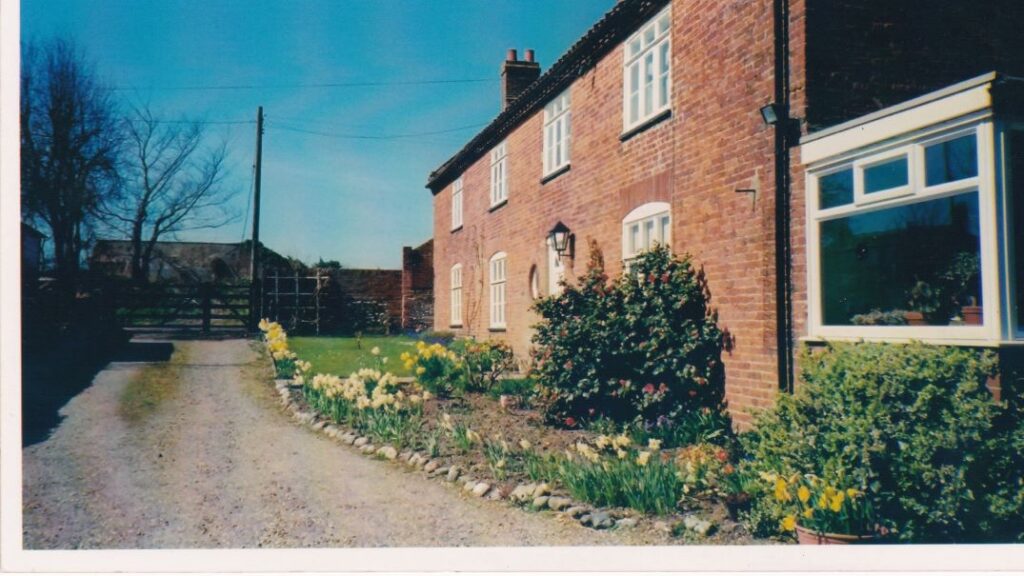
In 2014 the house was again divided into two, with the property nearest the road becoming a holiday let. The different levels within the house were becoming problematic for Ann and a self-contained Annex to the far end of the property was finally finished in 2024, where she now lives. The field behind the house is still owned by Anne.