Author Colin Needham
William Bartram Senior 1834-1920
Glebe Farm and Church Farm
Commencing in the first part of the 19th Century, the story of the Bartram family in Southrepps for more than one hundred years is bound up with the social and agricultural history of the village.
They were tenant farmers and subsequently owners of farms in and around the village.
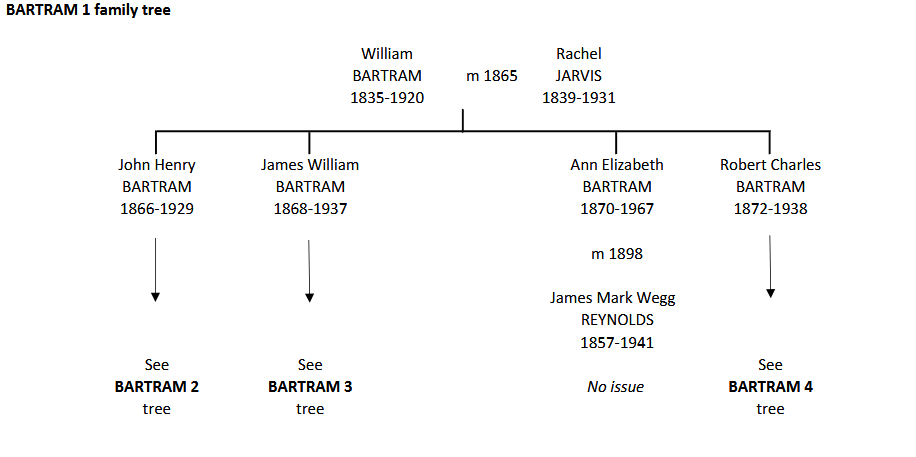
The farming dynasty took root in Southrepps with William Bartram in the 1840s and ended with the death of his last surviving direct descendant Judith Bartram in 1990.
The family’s considerable legacy and influence on the life of the village continues to this day in the form of The Bartram Memorial Trust. Since its inception in1990, following the death of Judith, the Trust has funded numerous projects to repair and upgrade the facilities in our Church, notably the Ruggs Hall extension, and it continues to provide funds for the sustenance of St. James Church and the smaller parishes in the Benifice.
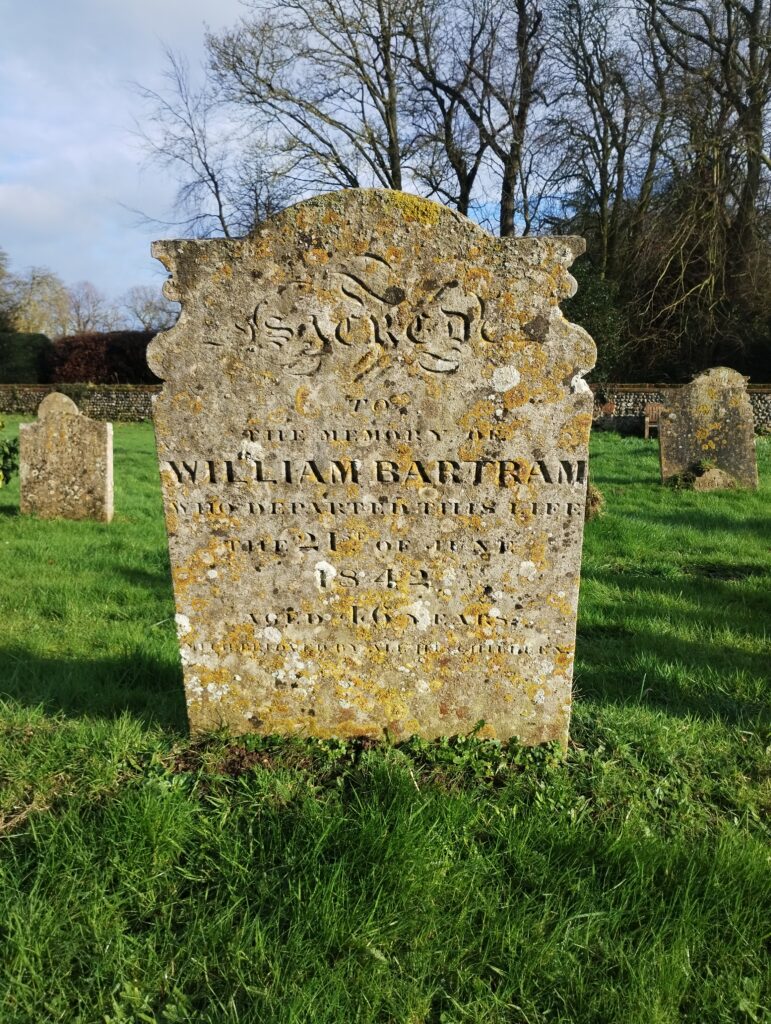
William Bartram was the first member of this family to set foot in Southrepps. He was born in 1834 in Erpingham. His father, also William, was a farmer as was his grandfather Robert.
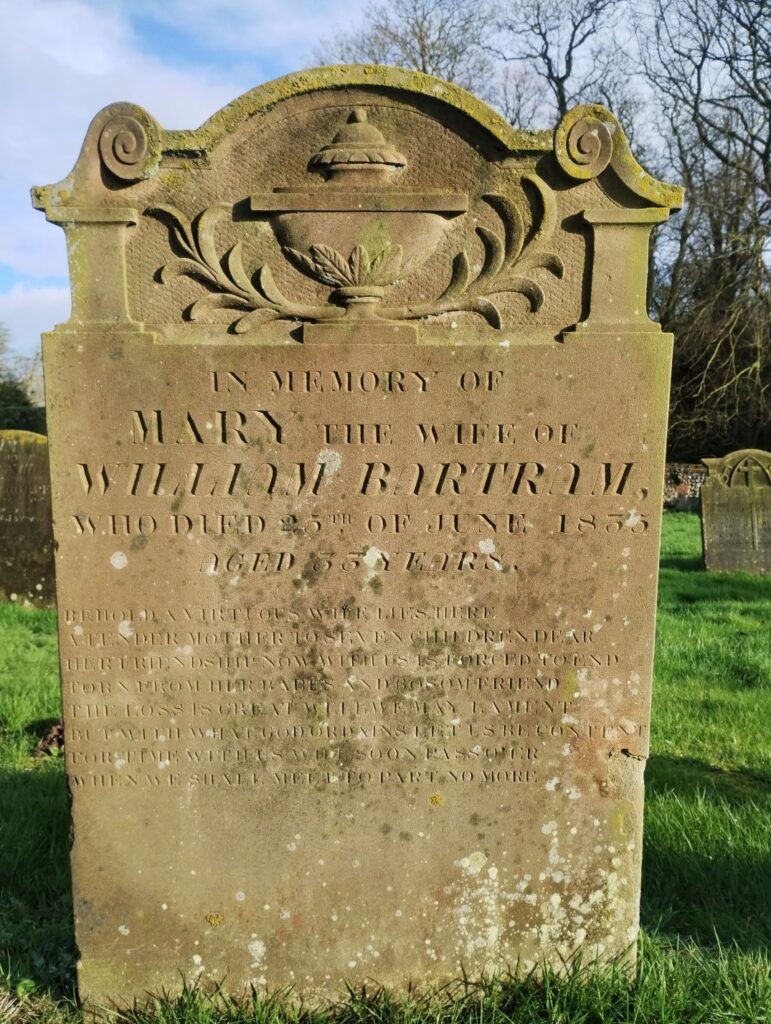
Twenty members of William’s family are buried in our Churchyard including his parents who died in Erpingham together with all but one of his children and grandchildren, some of whom died in North Walsham and in Felmingham. Why his parents, who died when William was very young, were buried in Southrepps remains uncertain but as William’s mother died when he was one year old and his father died just a few years later it is likely that William and his three even younger orphan siblings were brought up by other members of the family who may have had Southrepps connections.
At that time there were Bartrams recorded as living in Southrepps, Thorpe Market and Northrepps.
What is certain is that by 1851 at the age of 16 William is recorded as being Apprenticed to Christopher Woods, a Harness Maker in Upper Street Southrepps. Christopher Woods also farmed 26 acres of land.
His position in the census listing was next to Joseph Gray the Blacksmith, and it is a reasonable assumption that Wood’s premises were at Glebe Farm in the High Street. The tenanted land and the farm buildings are likely to be that shown on the 1839 Tithe Map occupied by the Rector, the Reverend George Glover. Glover was a much travelled and well-connected churchman and academic who owned and rented land in the village. He was probably not a hands-on farmer.
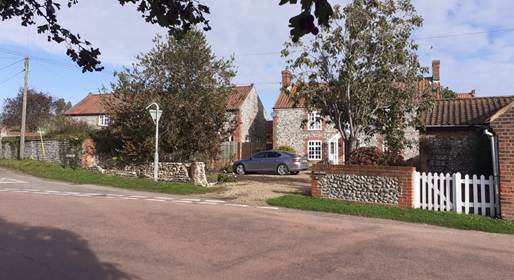
In 1861, William is recorded in the census as being in Plaistow, East London perhaps as a lodger at the home and premises of his brother Robert, who is described as a Linen Draper. William’s occupation is listed as a Saddler.
From roughly 1850 to 1875, farming in East Anglia was enjoying a so called “Golden Age” and a period of unprecedented prosperity. Norfolk was a grain-growing region and landownership was highly lucrative for those who could afford the investment. Locally, large estates were assembled by families with interests in banking and North Norfolk and especially Cromer were much favoured by them. Well-funded estates supported large communities of farm workers and their families. Around Southrepps the landowners devoted themselves to their social life, good works and field sports leaving the farm management to their Stewards and Tenants. During this time many of the brick and flint farmhouses and cottages in Southrepps were built by the landowners for their tenants. This was to encourage occupation by enterprising farm tenants and their workers and the businesses upon which they relied.
Ten years later in 1871, the census records that William is already in business in Upper Street Southrepps. He is a Farmer and Saddler, married to Rachel Jarvis from Knapton with three children: John Henry aged 5, James William aged 3 and Anne Elizabeth aged 1. He has a rented farm of 26 acres, and it is likely that this is Glebe Farm where he had been apprenticed as a harness maker, perhaps having taken over the tenancy from his former master. Christopher Woods had left Southrepps and was now a tenant Farmer of some 299 acres in Overstrand.
All of William and Rachel’s children were born in Southrepps; the youngest, Robert Charles was born in 1872.
Sometime after 1881 William Bartram took on the tenancy of Church Farm, at the top end of Church Street alongside the Rectory. At that time this farm was one of many on the 1380 acre North Norfolk sporting estate of Sir Thomas Fowell Buxton.
It is likely that William and later his son James William Bartram continued with the saddlery/harness making business and the Glebe Farm as tenants until William died in 1920.
Thomas Fowell Buxton acquired the estate in 1863 from his relative by marriage John Henry Gurney. In Southrepps this estate included Church Farm, Painters Farm (Wellspring), Lime Kiln Farm and other land in Gimingham, Trunch, and Northrepps.
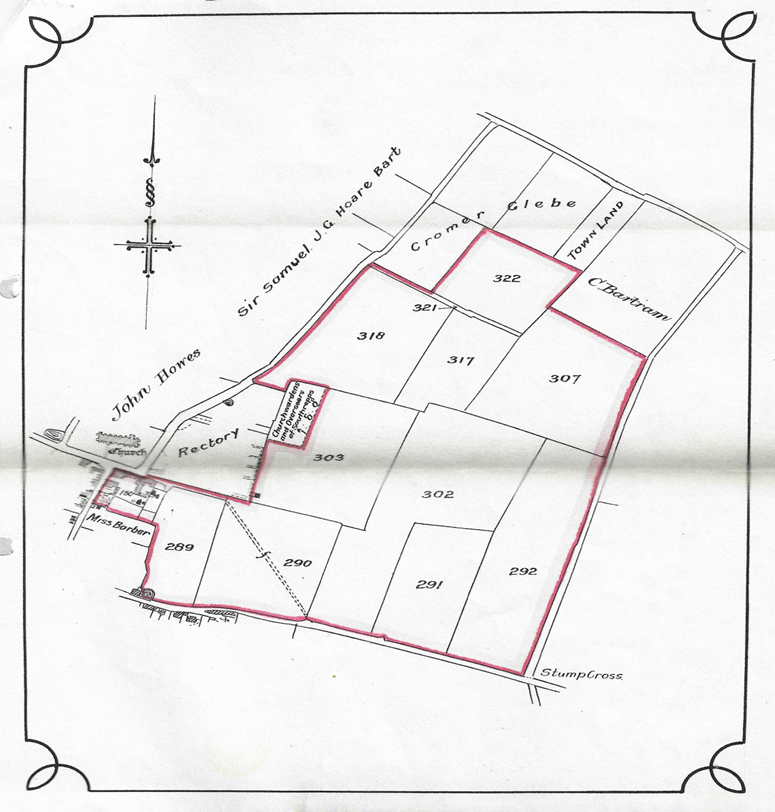
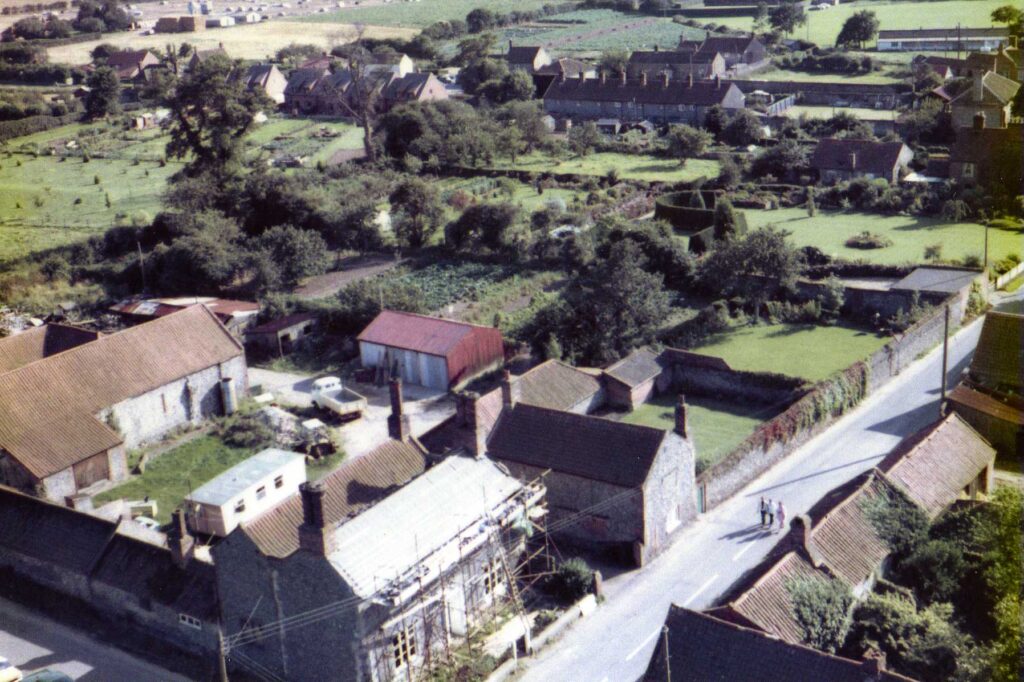
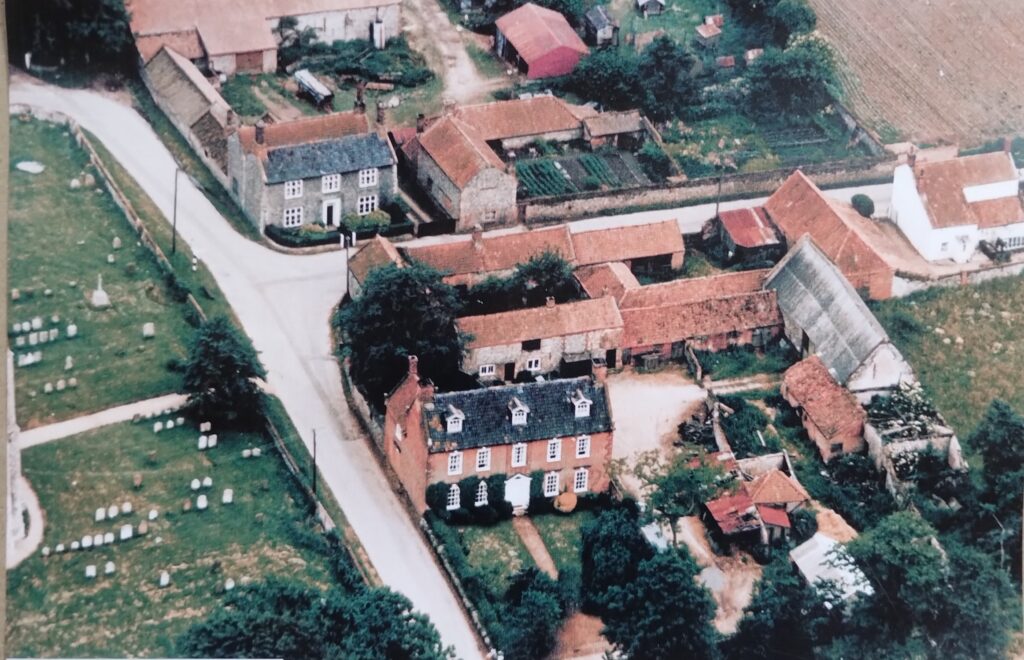
Church Farm was at that time a 63 acre arable farm, the house and farmyard little different from that shown in the photograph taken in around 1970
William’s tenure of Church Farm began during a period of financial turmoil and hardship in the English countryside. The repeal of the Corn Laws some three decades earlier had lifted the tariff on imported cereals, but its consequences were moderated by disruptive world events and rampant inflation in the United States.
Combined with the poor harvests and years of atrocious weather conditions in the 1870s, the resulting Great Agricultural Depression of 1873 to 1896 caused financial difficulties for landowners and farmers and destitution for farm labourers. The consequences for this area were poverty and depopulation. Farm rents and the value of land and property fell.
Many farmers, but not William Bartram, diversified their activities. For example, it was at this time that William Tyler took on the tenancy of the nearby Hall Farm to breed ducks and grow vegetables and flowers using the new railway connection to the booming city of London.
William and Rachel and their young family survived this tumultuous time. The 1991 census records that the grown-up children were all at home presumably working on the farm except for the youngest, Charles Robert who was an apprentice in a grocery shop in London.
Sir Thomas Fowell Buxton died in 1915 and he bequeathed his Estate to his son Thomas Fowell Victor Buxton Bart. He took possession in 1918. At this time right across the country a breakup of the large estates began including locally the Gunton Estate and the Buxton Estate.
In 1919 after the First World War, William Bartram, as a Sitting Tenant, purchased the Freehold of Church Farm including the land and farmhouse for £1500.
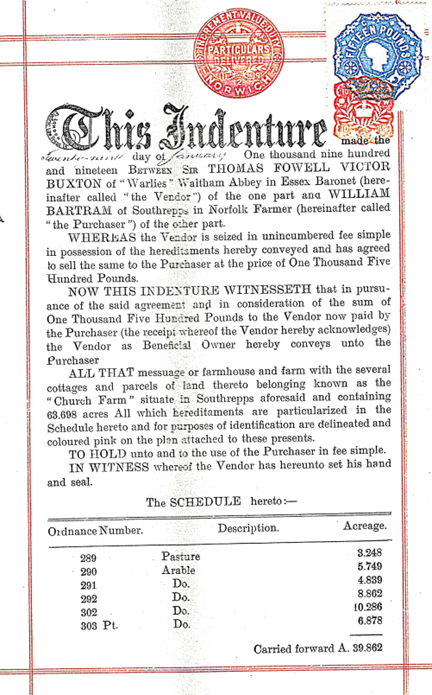
It is likely that William’s son Charles Robert Bartram also purchased Wellspring Farm from the Buxtons around the same time, as his ownership of adjoining Wellspring farmland is shown in the right hand corner of 1919 Deed Plan for Church Farm.
William Bartram died in 1920 aged 84 . By his Will the farm passed to his wife Rachel.
Rachel Bartram 1839-1931
Church Farm and Glebe farm
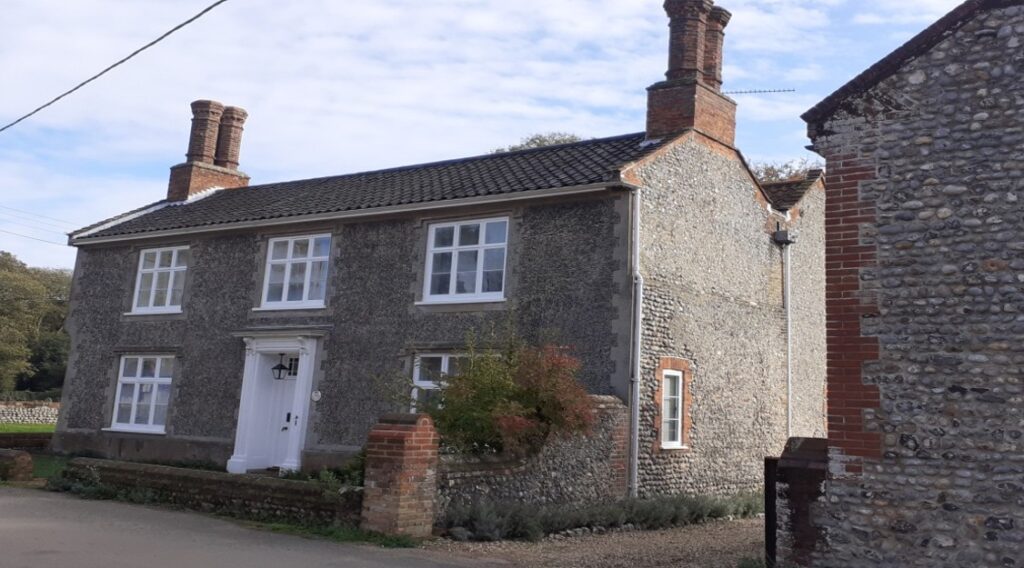
In 1921 Rachel aged 83 is Head of Household and the Farmer at Church Farm. At home with her were her granddaughters Nancy aged 19 and Miriam Bartram aged 16. Her grandson William Junior aged 22 was a labourer at Church Farm but was then living with his parents James and Laura at Glebe Farm. William had enlisted in 1917 for service in The First World War.
In 1926 Rachel his mother bought 11 acres of land from Albert William Gibbons a Warrener and Smallholder to add to the Church Farmland. The field is to the south of Mundesley Road adjacent to what is now Greenacres and it was probably rented by the Bartrams from Gibbons for some years before it was purchased.
There were strong family links to the Gibbons family who lived at Chestnuts on Long Lane and there were other close Gibbons family members in Trunch. John Henry Bartram, Rachel’s son, married Amelia Gibbons, Albert Gibbons’ sister, and Rachel’s grandson John Joseph Bartram married Cecily Gibbons from Trunch in 1937.
In 1929 Mrs Rachel Bartram then aged 91 was still listed in Kelly’s Trade Directory as the Farmer at Church Farm. It is likely that by this time James William managed the farm.
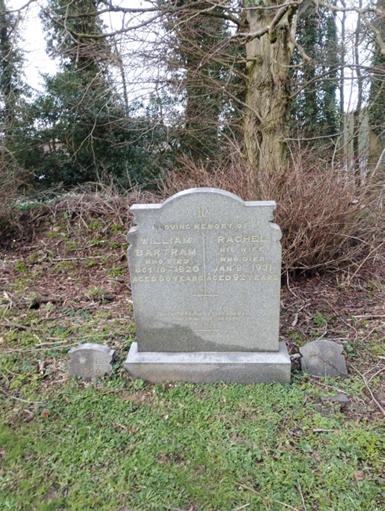
Rachel died in 1931. In her Will written in 1921 she had appointed her children, John Henry, Ann Elizabeth (Reynolds) and Robert Charles as Executors. John Henry had died in 1929. In 1932 the living Executors sold Church Farm to James William Bartram
In the 1930s East Anglia was the “epicentre of a severe agricultural depression that saw the region’s traditional arable farming face a near total financial collapse. The price of grain fell due to cheap imports. Agricultural workers’ wage rates were no longer guaranteed by law and consequently wage levels fell impacting the farm workers and the rural businesses upon whom they relied. Exceptionally some farms were abandoned entirely because cultivation was no longer profitable. Farmers could no longer afford to permanently employ workers, and much reliance was made on family members and seasonal workers.”
Many farm workers left the industry and moved away. Older unemployed workers suffered the consequences of poverty. The value of land and property in rural areas collapsed. There was little or no investment by landowners, landlords and tenants in their property.
In Norfolk, belatedly, government intervention introduced subsidies and price guarantees for sugar beet growing and this stabilised farm incomes for those willing to grow this new crop. In Southrepps, it was during this time that the “Dutch Farmers” of the East Anglian Real Property Company bought up, at a discount, farms specifically to grow sugar beet which was taken by rail to their factory at Cantley. These farms included Hill Farm, Manor Farm and Lime Kiln Farm. The Dutch Farmers were innovators with an academic and scientific approach to plant breeding, soil cultivation and using the latest farming methods and employment practices. This secured the jobs of those fortunate enough to work for them
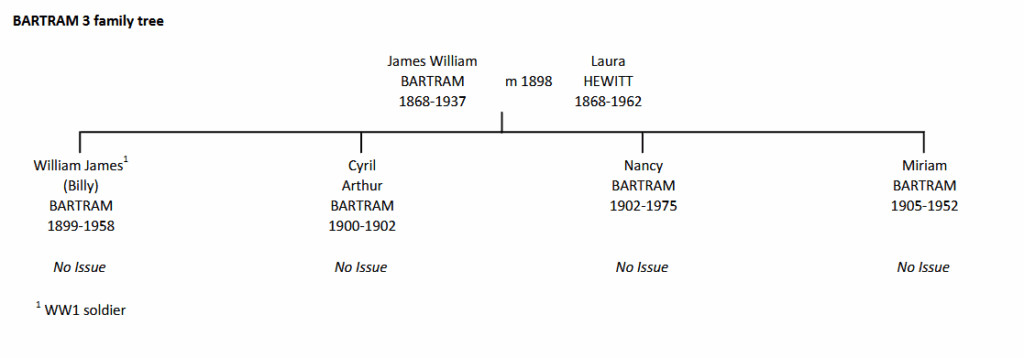
James William Bartram 1868-1937
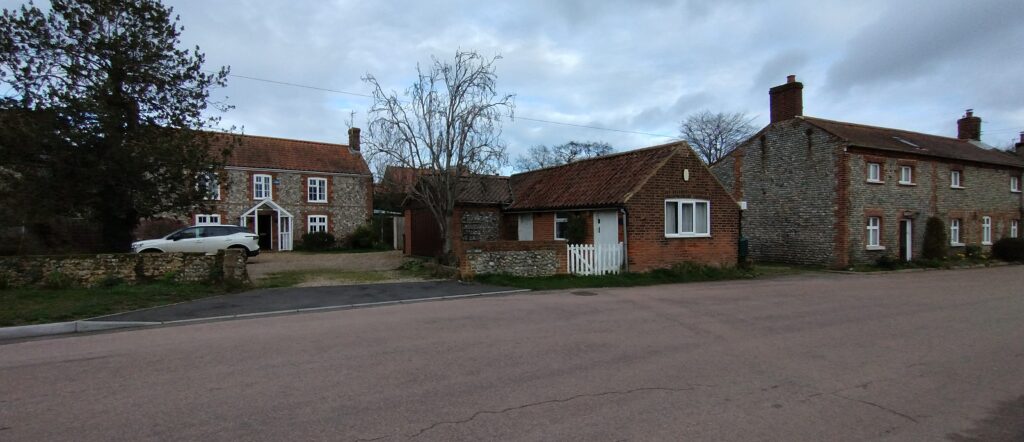
Glebe Farm and Church Farm
James’s occupation was listed as a Saddler and Harness Maker and in 1898 he married Laura Hewitt. In 1901 he was working on his own account as a saddler.
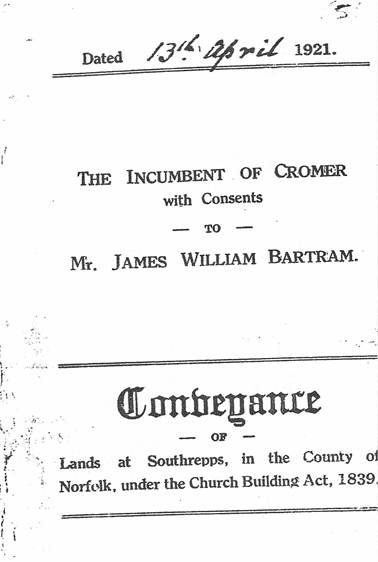
In April 1921 James purchased the Freehold of Glebe Farm including the farmhouse and saddlery together with 26 acres of Church Land (Cromer Glebe) from The Incumbant of Cromer. The sale price was £971 15s. 3d.
It is likely all the family worked together running both farms including rented Church Land.
In 1929 James purchased, as sitting tenant, a further 17 acres of Church Land adjacent to but not part of the original Glebe Farm holding.
On the death of his mother Rachel in 1931, with his own land and the Church Farm, James William had 91 acres to manage.
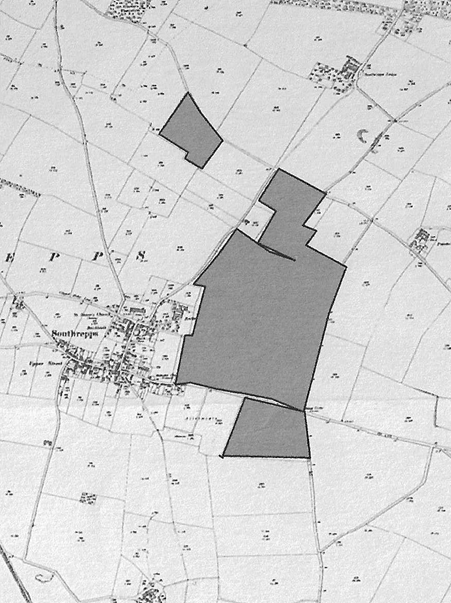
He moved from the Glebe Farm to Church Farm with wife Laura and their children; William then aged 33, Nancy aged 34 and Miriam aged 28. The children never married.
In 1932, James William sold land off Thorpe Road to the District Council to be used for Council Housing. In the same year he sold land to the County Council for highways improvement as well as Glebe Farmhouse and Saddlery to Elizabeth Howes.
Strips of land on the north side of the Mundesley Road for Highway Improvements. O.S. 209,290,281 and 292. were also sold.
In 1933 Kelly’s directory, James is recorded as the farmer at Church Farm.
James William Bartram died in September 1937 aged 69.
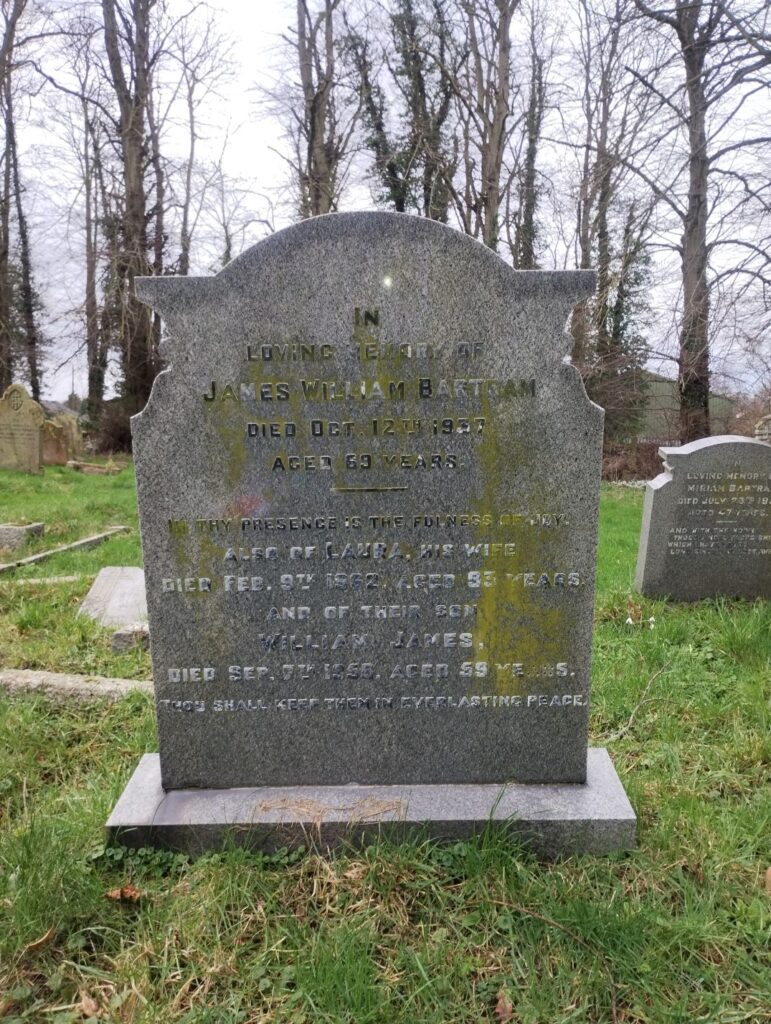
Laura James’s widow and her son William took joint possession of the farm via a Vesting Assent in April 1938.
Laura Bartram and the children continued to live at Church Farm. In the 1939 Register, Laura, a Retired Farmer, is head of the household with William her son as The Farmer. His sisters Nancy and Miriam’s occupations were described as Domestic Duties.
Over time, parts of the farm were gifted or sold:
In 1946 Land for the construction of a Police House in Chapel Street
In 1948 Land off the Northrepps Road past Land’s barns. O.S. 263. The first telephone exchange in Southrepps was built in a corner of this field in 1930. The derelict shell of the old Telephone Exchange is still standing.
In 1951 Land off Chapel Street part of O.S.290 was sold to the Post Master General for a new Telephone Exchange.
In 1953 By Deed of Gift to the Methodist Church land to the rear and side of the Chapel in Chapel Street.
In 1957 Land sold to Stephen Pike of Gables Farm O.S. 202 and part of O.S. 186
Miriam Bartram died in 1952
William Bartram died in 1958
Laura Bartram died in 1962. She was buried with her husband James in Southrepps Churchyard.
Nancy Bartam sold Church Farm Cottage and its garden to John Marlton.
Church Farm had remained a traditional mixed arable and dairy farm for many years in contrast to most of its neighbours in the village. By 1975 the premises were obsolete and in a poor state of repair.
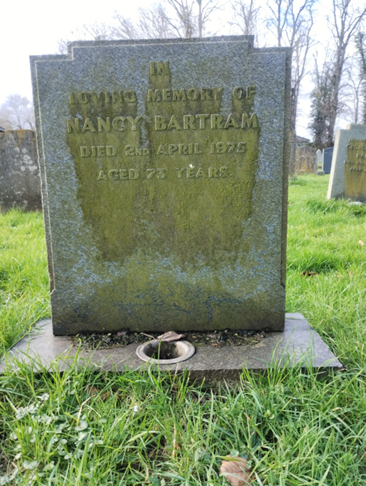
Nancy died on 2nd April 1975. In her Will Nancy had appointed Barclays Bank Trust Company Limited as her Executors.
In 1975 they sold the land and buildings to the “Dutch Farmers”, The East Anglian Real Property Company (EARPC) for £66,000.
EARPC then sold on the farmhouse, farmyard and home paddock to Roger Codling, a Southrepps builder. He renovated the house and farm buildings and built new homes on what is now Meadow Lane.
At the same time EARPC sold land to John Everitt for an extension of the arboretum opposite the White House on Church Street.
John Henry Bartram 1868-1929
Grammar School Farm North Walsham, Heath Farm North Walsham, Ruggs Hall Farm Felmingham.
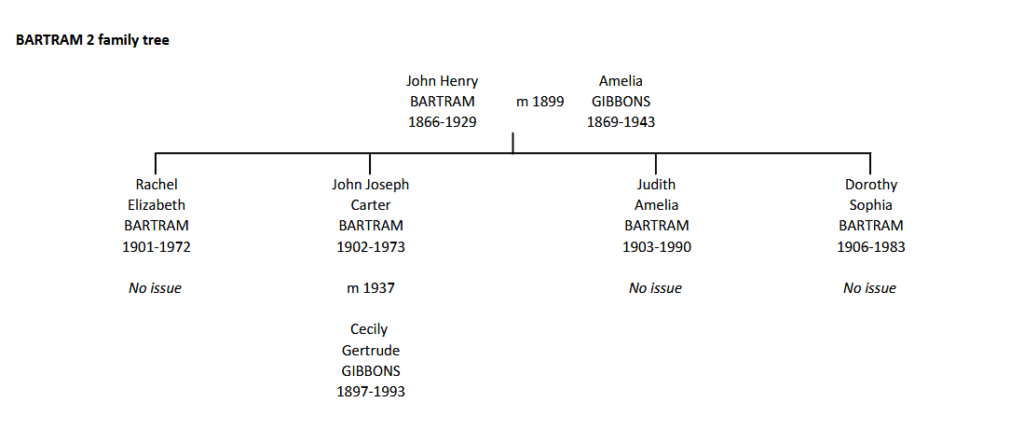
John Henry Bartram was born at Glebe Farm in Upper Street Southrepps in 1868. In 1881 he is 15 years old and a labourer on the Farm. He moved with his parents to Church Farm and worked for his father.
In 1899 he married Amelia Gibbons from Southrepps. By 1901 the Census records that John Henry had a farm of his own in Bradfield Road, North Walsham. This is likely to be Grammar School Farm. Rachel was his first-born child.
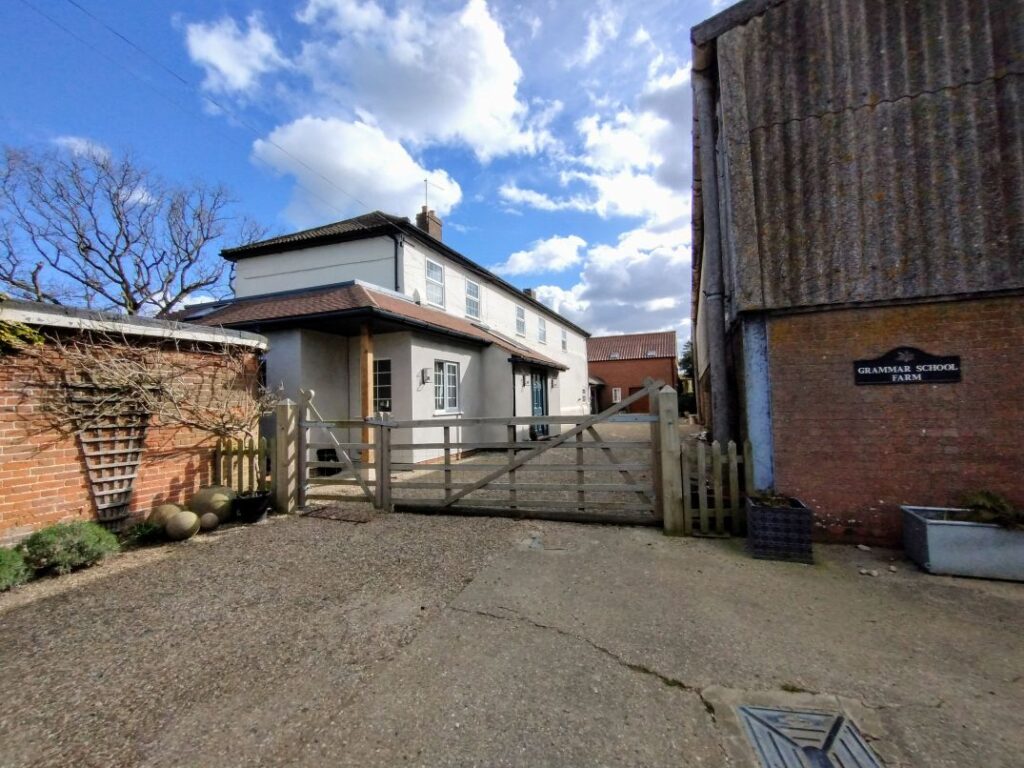
By 1911 the family were still at Grammar School Farm now with four children; Rachel Elizabeth 10, John Joseph 9, Judith Amelia 7, Dorothy (Dotty) 4.
Ten years later in 1921 the family had moved to Heath Farm on the Norwich Road out of North Walsham. John Henry’s son John Joseph aged 19 was working for his father.
The Southrepps Society does not know if John Henry was a Tenant or if they owned the farms they occupied.
In 1929 John Henry dies at Ruggs Hall Farm in Felmingham. He was buried in Southrepps with his other family members.
It is not known when the family moved residence to Ruggs Hall Farm or if they gave up the farms they moved from.
The 1939 Register records that John Henry’s widow Amelia and her daughters Rachel, Judith and Dorothy are all living at Ruggs Hall. All the ladies were recorded as Farmers.
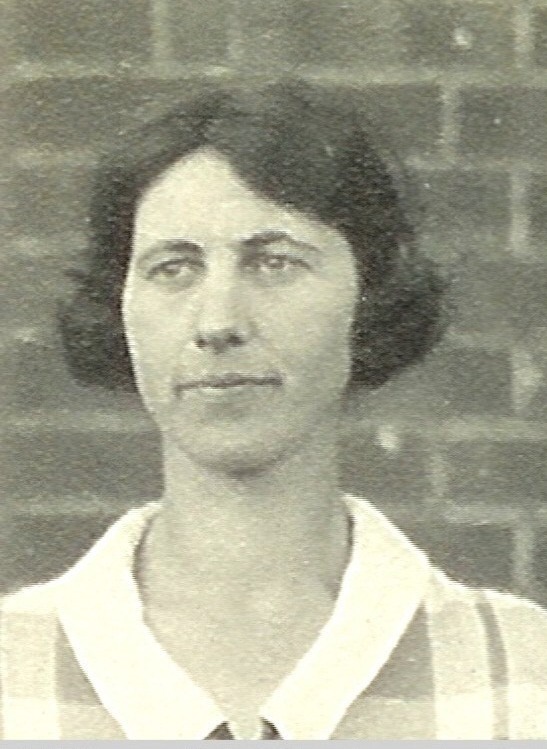
In 1939 her son John Joseph is the Farmer at Brick Kiln Farm on Lyngate Road North Walsham which was adjacent to Grammar School Farm where he was born in 1902. He married Cecily Gibbons in 1937. They did not have children.
John Joseph Bartram died in 1973 aged 72 at Lyngate Farm in North Walsham. He is buried in Southrepps Churchyard.
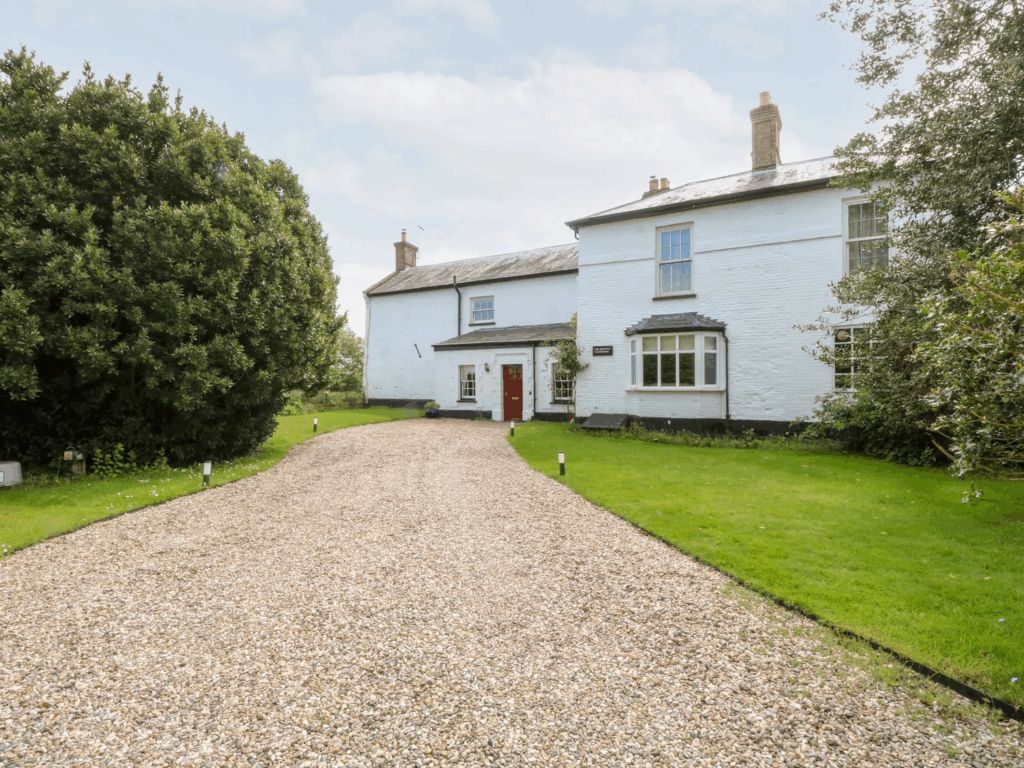
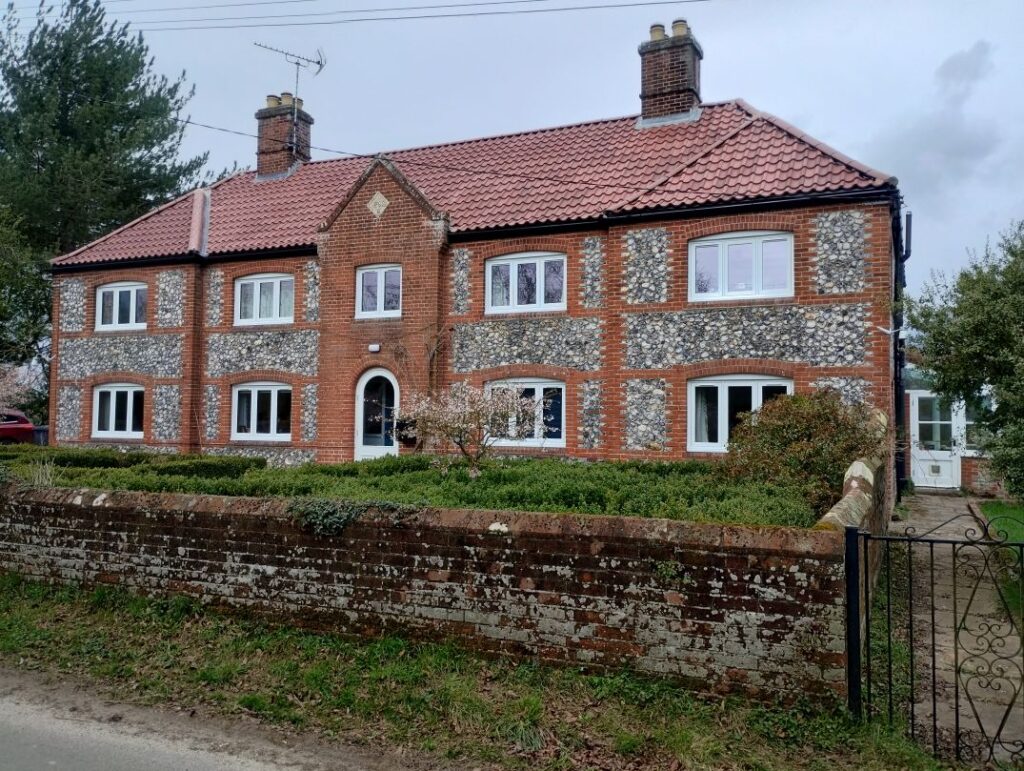
Lyngate Farm, Grammar School Farm and Brick Kiln Farm are all clustered around Bradfield Road, North Walsham. Whether the Bartram farms were tenanted or owned is not known to the Southrepps Society.
His wife Cecily died in 1993 aged 95 at the Manor House Care Home in North Walsham. She is buried in Southrepps Churchyard.
The Ruggs Hall farmers acquired or rented Antingham Hall and Farm. Our records do not include any information on how and when this took place, but it is understood that they managed Ruggs Hall Farm and Antingham Hall Farm as a single unit. It is possible that one of the daughters lived in Antingham Hall for some time.
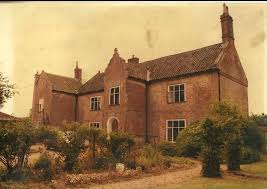
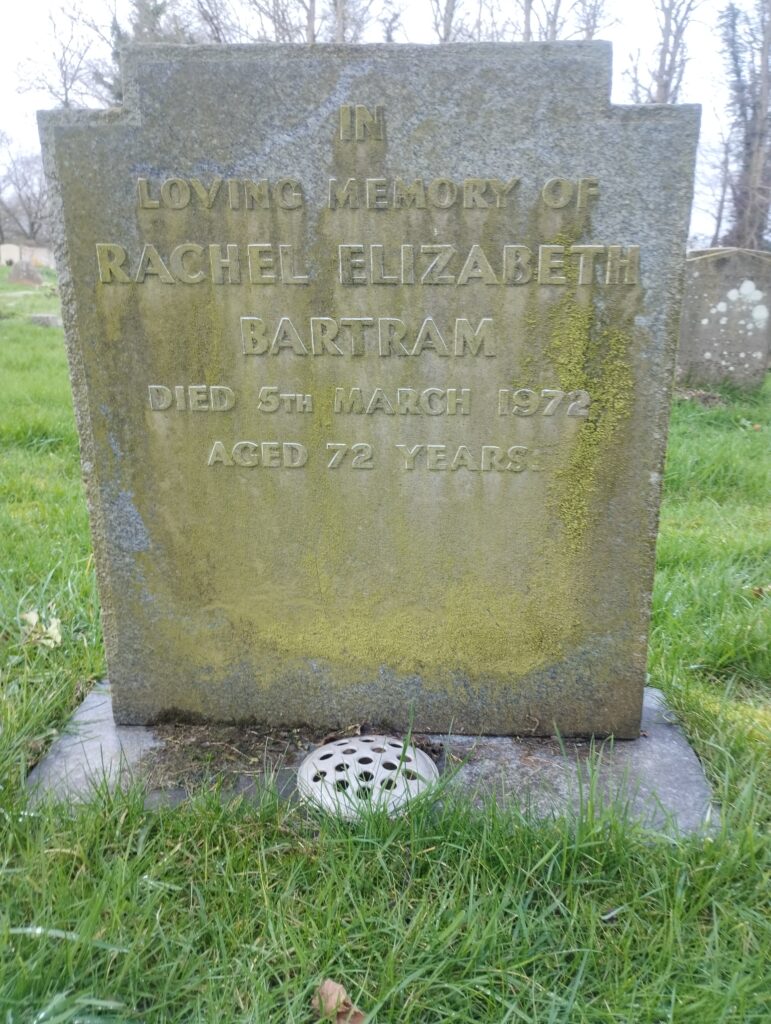
Rachel Bartram died at Ruggs Hall in 1972 aged 72.
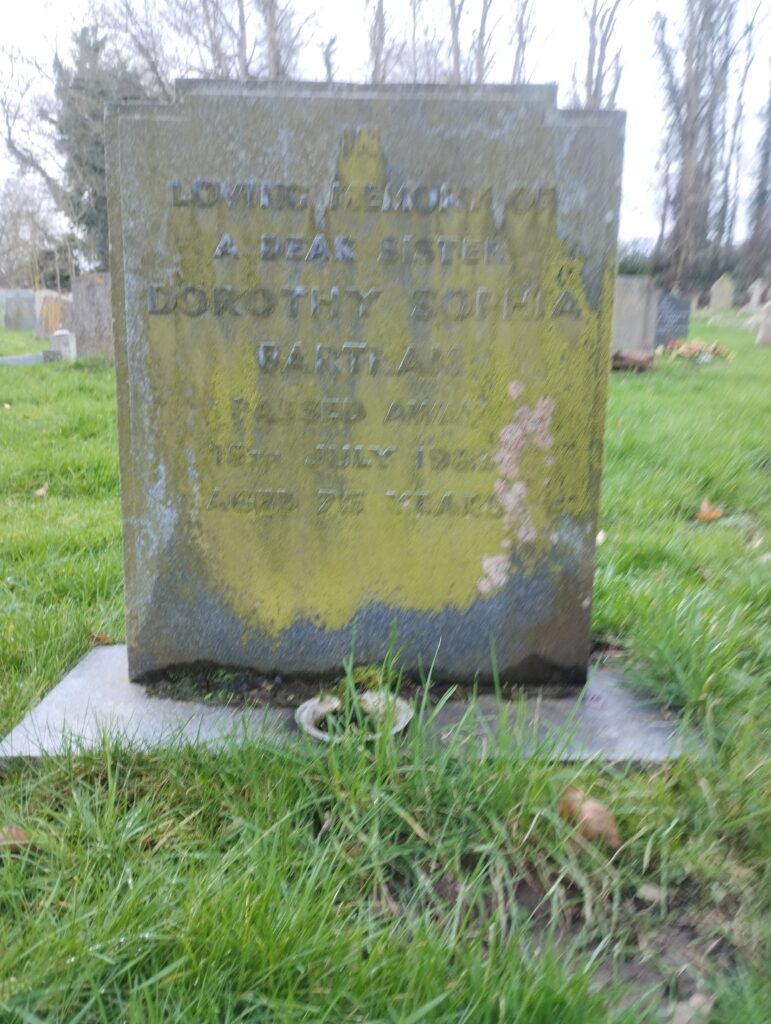
Dorothy Bartram (Dotty) was a well-known and highly respected Norfolk farmer with a reputation for breeding and selling quality pigs.
Dorothy died in 1983 and she is buried in Southrepps Churchyard.
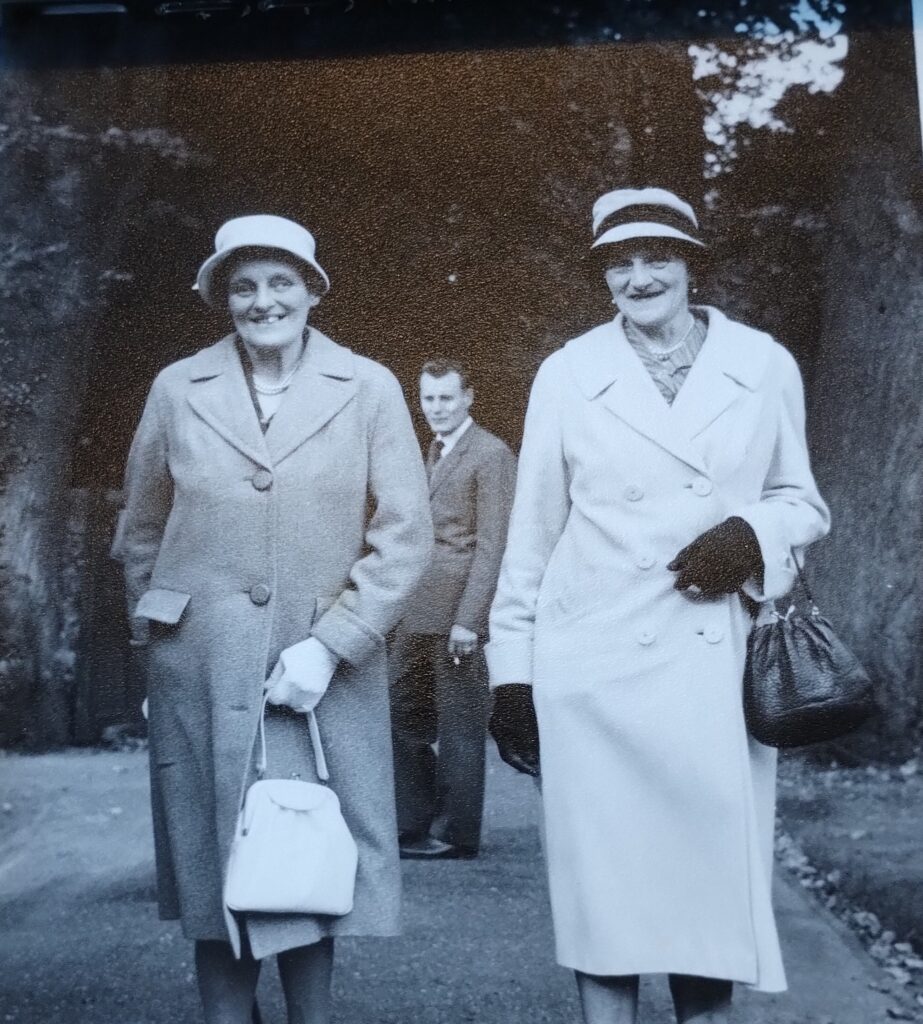
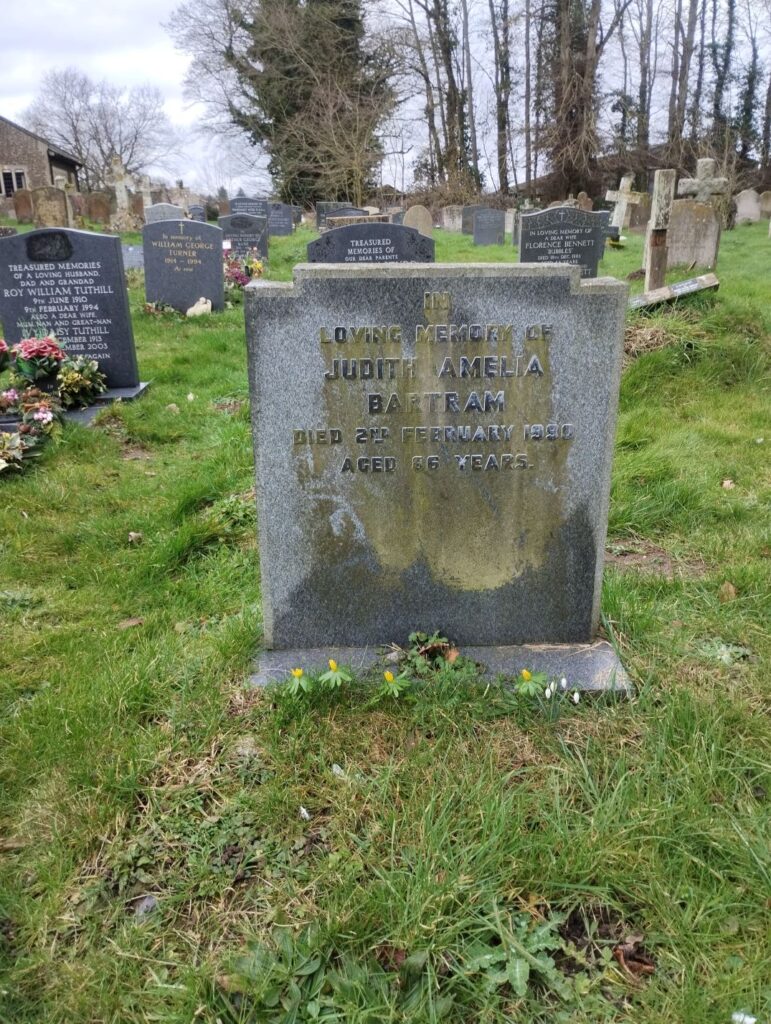
Judith Bartram died on the 2nd day of February 1990. She was the last surviving direct member of William Bartram and Rachel Bartram’s family.
It is likely that Judith was the beneficiary of successive bequests of land and property and cash from members of her family who had died before her. Details of her assets at the time of her death are not known to the Southrepps Society. Probate was granted to Executors on 3rd May 1990; the gross value of her estate was £1,876,285.
By her Will made in 1986 and after bequests to family, friends and former employees the residue of her estate was divided equally between the Rectors and Churchwardens of the Churches in Felmingham, Antingham and Southrepps for general church purposes.
Subsequently the bequests were formalised as charitable Trusts for each Church.
Ann Elizabeth Bartram 1870-1967
Church Farm and Beeston Abbey Farm
William and Rachel’s daughter Ann was born in Southrepps in 1870 at Church Farm. She worked on the farm with her parents and brothers until she married James Mark Wegg Reynolds in 1898.
James Reynolds was the Farmer at Abbey Farm, Beeston. At the time of their marriage Ann was 28 and James was 41.
The census and the 1939 Register records them as living at Priory Farm.
James Reynolds died on 20th May 1941 leaving his estate to Ann.
Ann died on 11th April 1967 at Beeston Priory. Her Executor was her nephew, George William Bartram of Wellspring Farm Southrepps. Her estate at Probate was £37,356.
Unlike her other family members, who were all buried in Southrepps, Ann was buried with her husband in Beeston Churchyard.
Robert Charles Bartram 1872-1938
Wellspring Farm
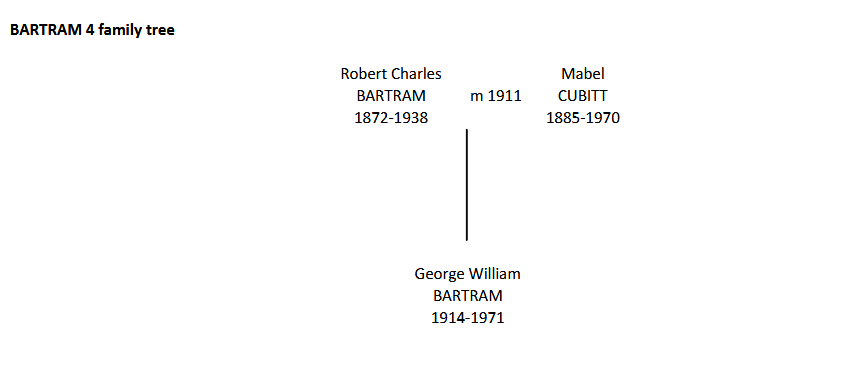
William and Rachel’s son Robert Charles (Sometimes Charles Robert) was born in 1872 in Glebe Farm Southrepps. He worked on the family farm. He briefly moved away from Southrepps and in 1891 was recorded as a Grocer’s Assistant at an address in the market place in Docking.
By 1909 he had returned to Southrepps and married Mabel Cubitt. He was 35 and Mabel was 24.
In 1911 he is a tenant Farmer at Wellspring Farm Southrepps.
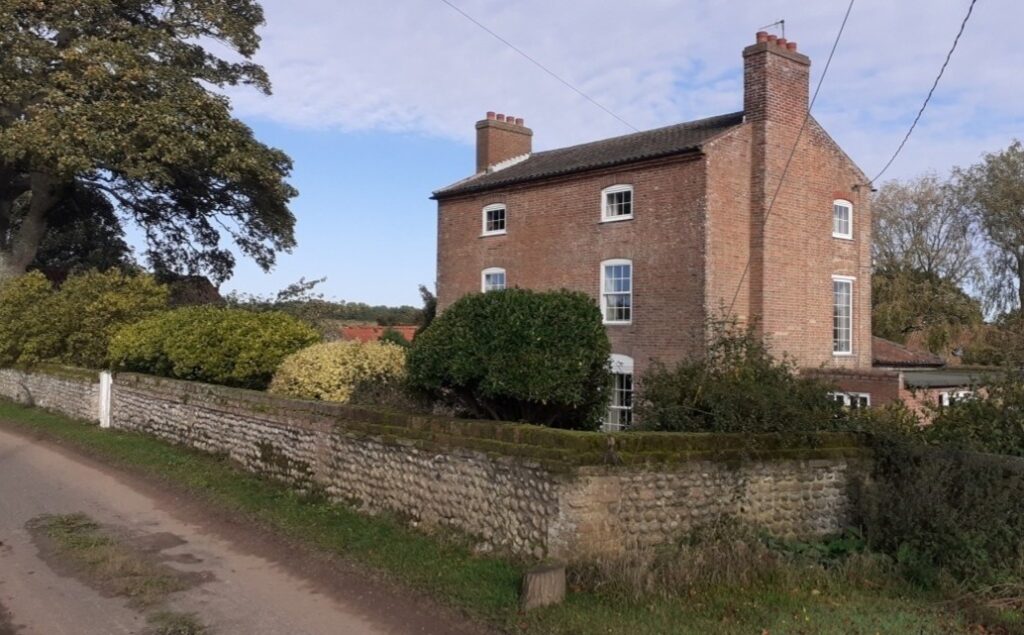
In 1915 they had a son George William.
It is likely that Robert Charles purchased Wellspring Farm sometime around 1919 from Sir Thomas Fowell Buxton.
Robert Charles Bartram died in 1938 aged 66. He is buried in Southrepps.
Mabel and her son George continued to manage the farm.
Mabel died in 1970 aged 98.
George Bartram died in 1971 aged 56. Probate records list his estate as £76,199.
On the death of George, Wellspring Farm land was bought by Edward Harrison of Hall Farm, Trimingham.